
A concussion can follow a blow to the head, or a force to the body that rapidly moves the head. You do not have to lose consciousness. Symptoms can include headache, dizziness, difficulty concentrating, fatigue and sensitivity to light. What is happening inside the brain?
The Amsterdam international consensus describes sport-related concussion as a traumatic brain injury caused by a direct or indirect force, with a disturbance of brain function. Conventional scans may be normal. The changes are mainly functional and cannot be diagnosed from a scan alone.
The temporary energy mismatch
The impact stretches nerve-cell membranes and disrupts their usual balance of charged particles. Cells work to restore that balance and need more energy, while the supply of usable energy may be less efficient for a time. This neurometabolic cascade is a model described by Giza and Hovda. It helps explain why thinking, movement and sensory input may feel unusually demanding after the injury.
This explanation does not mean every headache is caused by one chemical change, and it does not give an individual recovery deadline. Neck injury, vestibular problems, sleep, mood and migraine can contribute to symptoms. An assessment considers all of these.
Why do symptoms change with activity?
Early after injury, screens, exercise or complex surroundings may provoke symptoms. The response varies between people and across days. A short period of relative rest is often useful, followed by a gradual return to daily activity and light aerobic exercise within tolerance, according to the CDC recovery guidance and the sport consensus. Prolonged complete isolation in a dark room is not the standard goal.
Progressively increasing school, work and exercise gives the person and clinician information about tolerance. After a short initial rest, mild and brief symptom increases during carefully dosed activity can be acceptable; a marked or lasting deterioration means reassessing the plan.
What does rehabilitation address?
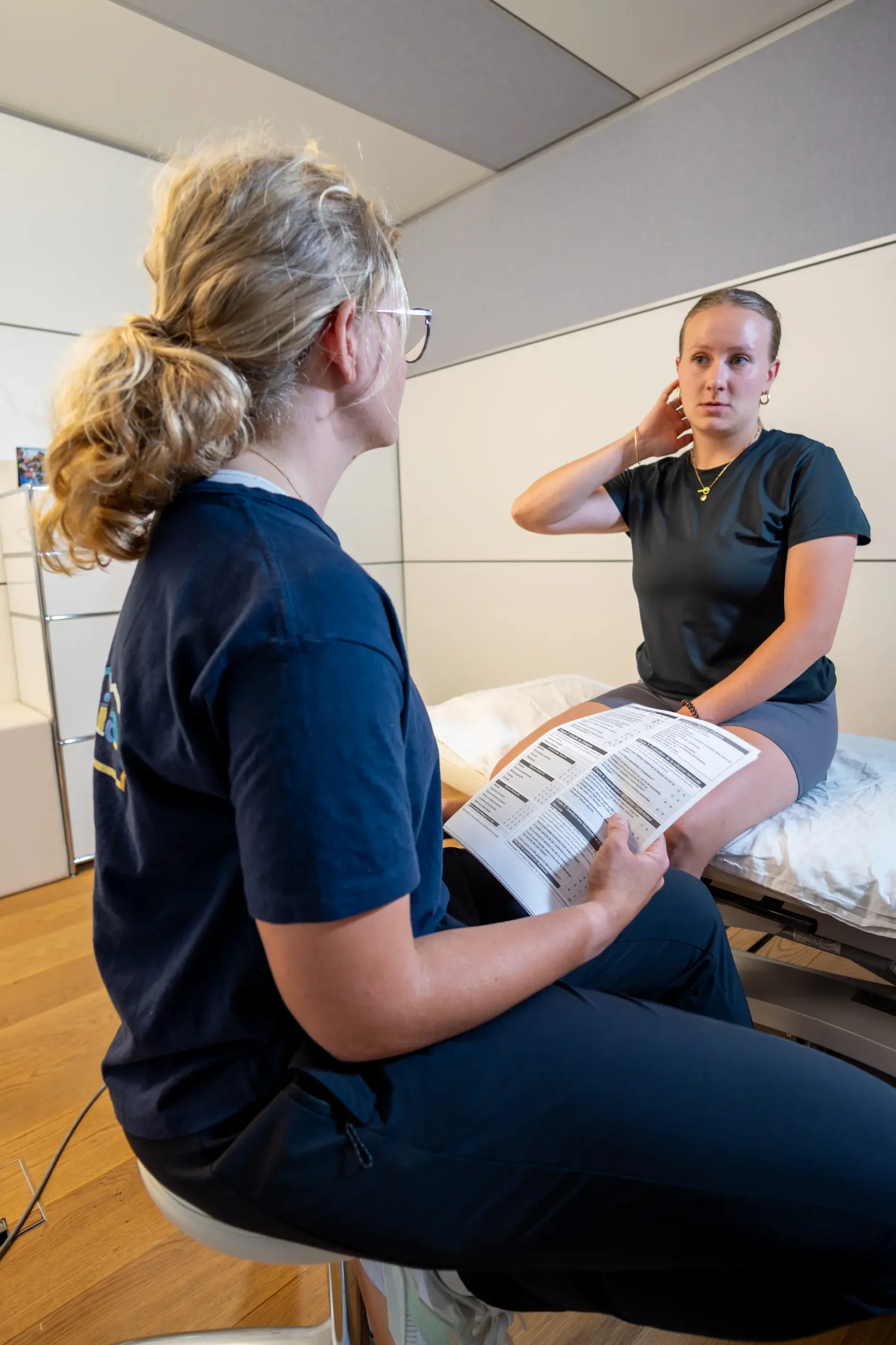
A clinician can examine the neck, balance, eye movement, vestibular function and exercise tolerance. Treatment might include graded aerobic activity and targeted exercises when relevant. See how concussion physiotherapy is assessed in Basel for the practical side of this process.
A new neurological deficit, repeated vomiting, worsening headache, seizures or new double vision requires urgent medical assessment. Read the guide to warning signs after a head injury. For an individual return-to-sport plan, concussion rehabilitation in Basel explains the options.
Frequently asked questions
Can a concussion happen with a normal CT or MRI?
Yes. A concussion is primarily a clinical diagnosis involving altered brain function; routine structural scans may appear normal. Scans may be used to look for other injuries when indicated.
Does loss of consciousness have to occur?
No. Many concussions happen without a loss of consciousness. Symptoms, the mechanism and the clinical assessment matter.
Why can exercise initially trigger symptoms?
Activity can reveal temporarily reduced tolerance and other factors such as vestibular or neck problems. Carefully graded activity, adjusted to the response, is usually part of recovery.
Leave a Reply