
SPORTS PHYSIOTHERAPY IN BASEL
Physiotherapy for endurance and outdoor sports in Basel
Running, trail running, cycling, triathlon, skiing and mountain sports
Endurance sports ask the body to repeat the same task thousands of times over hours, weeks and months. Sometimes there is a clear injury. Quite often there is not. Training demands simply increase faster than the body’s current capacity to absorb them.
I work with recreational and competitive athletes. First we identify what is actually limiting you now. Then we rebuild the capacities that matter (with the goal of making the return to training sustainable, not just quick).
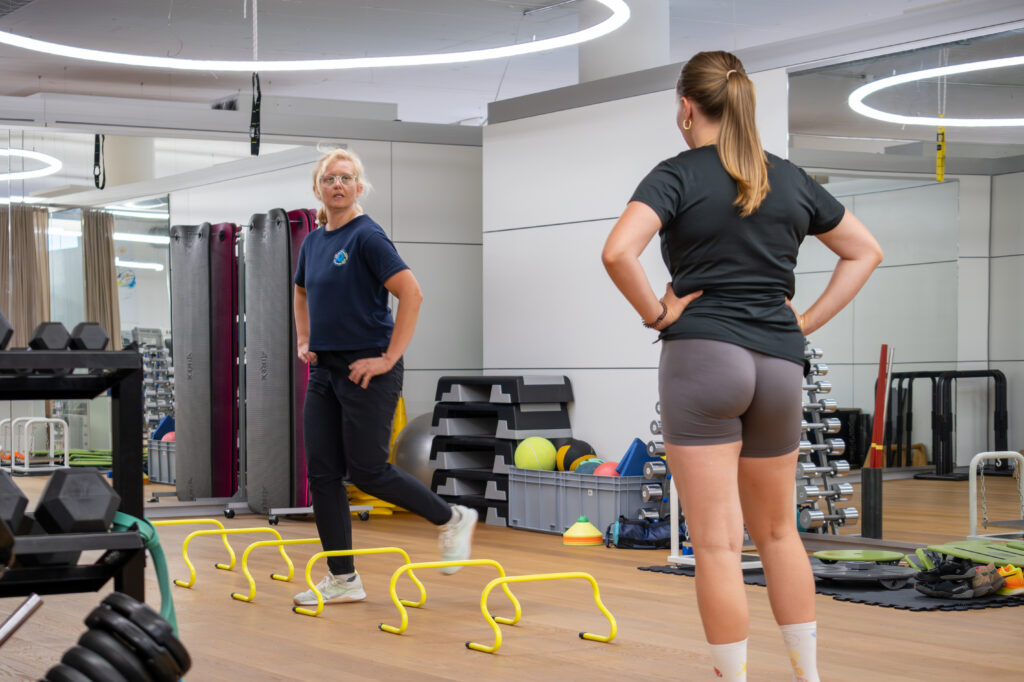
ENDURANCE & OUTDOOR SPORTS
Physiotherapy tailored to the demands of your sport
Duration, terrain, repetition, elevation gain and your training calendar all change the demands placed on your body and therefore the rehabilitation strategy.
I support athletes whose sport is shaped by prolonged effort, terrain and repeated loading: running, marathon, trail running, road cycling, gravel, mountain biking, triathlon, cross-country skiing, ski touring and other mountain sports.
These disciplines share a lot, but not everything. The body has to tolerate high volumes of work and recover between sessions. Mountain sports add another layer altogether: elevation gain, long descents, uneven ground, cold, altitude and carrying equipment (often exposing deficits that barely show up in everyday life).
That is why I do not use the same protocol for everyone. The assessment takes into account your sport, current level, schedule, environment and goals. A marathon runner, a trail runner, a mountain biker and a ski mountaineer may hurt in the same place and still need very different rehabilitation.
Common problems in endurance and outdoor athletes
A diagnosis is only the starting point. We also need to understand why a particular area can no longer tolerate the current level of load.
Problems that commonly limit endurance athletes
I commonly see knee pain, Achilles or patellar tendon problems, foot pain, muscle overload, hip or back pain, and recurrent symptoms after an older injury. In cyclists, the neck, upper back, shoulders or hands can also become limiting.
Mountain and winter sports add their own demands: repeated descents, uneven ground, cold, fatigue, equipment and long days outside. These conditions can expose deficits that are almost invisible in everyday life.
The diagnosis does not tell the whole story
Two people with the same diagnosis can have very different needs. I therefore look for what is actually limiting your sport: strength, local muscular endurance, control, relevant mobility, recovery, training volume or a return that progressed too quickly after a break.
After surgery, injury or a longer period away from sport, the goal is to rebuild enough capacity for the sport you actually want to do, not simply to feel comfortable during normal daily activities.
Do not just treat the pain: understand the load
In endurance sport, symptoms often appear in a very concrete gap: what your body can tolerate today is not yet enough for what training is already asking of it.
I start by identifying what changed around the onset of symptoms (volume, intensity, elevation, frequency, equipment, recovery, terrain or returning after a break). Only then do I assess what your body currently tolerates. Strength, muscular endurance, control and your response to exercise help define the capacity we actually have to work with.
Finally, I compare those capacities with the demands of your sport. A two-hour ride, a technical trail, a day of ski touring or several days in the mountains are not the same problem. Rehabilitation should prepare you for the sport you actually want to do, not just for a comfortable day in ordinary life.
This helps avoid two common mistakes: returning fully to training as soon as pain improves, or avoiding load for too long without rebuilding the capacity you need. The aim is to find the right progression and create enough reserve for your sport.
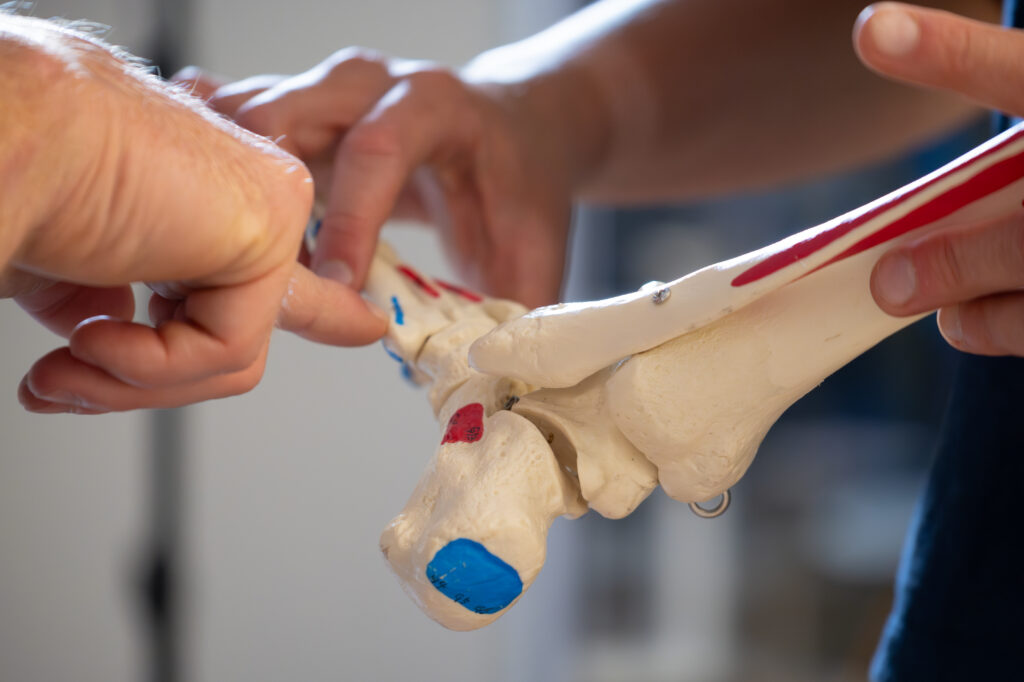
RUNNING & TRAIL RUNNING
Running analysis is useful only when it answers a real question
My training with The Running Clinic informs my approach to running-related injuries. I first look at your history, your training and the function that matters for your sport.
A gait or running analysis is therefore not automatic. It becomes useful when it helps answer a specific clinical question or guides the return-to-running process.
We then build a realistic progression. Depending on the situation, this may include strength work, jumping, cadence work, hills, downhill loading or a gradual increase in running time.
What can be assessed in a cyclist?
Pain on the bike rarely comes from one factor alone. I assess what is relevant to your symptoms, your training load and your goals.
Knee
Patellofemoral pain, patellar tendon symptoms or pain that appears with longer rides, climbing or an increase in training volume.
Back
I assess tolerance to prolonged positions, fatigue, useful mobility and the capacity of the trunk to support repeated effort.
Neck & shoulders
Long rides can provoke cervical or upper-back symptoms. Position and local muscular endurance are considered in the assessment.
Hip & pelvis
Hip pain, discomfort while sitting or relevant asymmetries may influence pedalling and tolerance to longer rides.
Training load
Volume, intensity, elevation gain, sequencing of sessions and recovery are discussed to understand what changed before symptoms appeared.
Strength & muscular endurance
I test the physical qualities needed to repeat effort without losing control or reaching your limit too early.
Return to cycling
After injury or surgery, duration, intensity, terrain and frequency are reintroduced progressively according to your recovery.
Position & bike-specific demands
Your position can be reviewed when it appears relevant to the symptoms. I do not replace a full bike fitting; if one is needed, I refer you to the appropriate professional.
Two cyclists with the same pain do not necessarily have the same problem. The assessment therefore remains individual and linked to your real riding demands.
The goal: return to training, not just become pain-free in daily life
Feeling better day to day does not automatically mean your body is ready for several hours of sport or competition.
Return to sport is progressive, but not based on a rigid protocol. First, we rebuild what is missing: strength, muscular endurance, control or tissue tolerance. Functional testing then helps determine whether those capacities are approaching the demands of your sport.
Sport-specific load is then reintroduced step by step: duration, intensity, elevation, frequency, terrain and consecutive training days. For mountain and winter sports, this may also include long descents, carrying equipment or long days outside.
The final question is therefore not only “Does it still hurt?” but “Is my body ready for what I want to ask of it again?”
EXPERTISE & EXPERIENCE
Expertise built in the clinic and in high-performance sport
My approach combines sports physiotherapy, continuing education and practical experience with athletes. Care is still adapted to the individual in front of me and to their actual level of sport.
My work in endurance and outdoor sports is built on several complementary areas. I am a sports physiotherapist in Basel with a strong focus on active rehabilitation, lower-limb injuries and return to sport. Training with The Running Clinic adds specific expertise in running injuries, load management and progressive return to running.
I also have hands-on experience supporting athletes and teams at international level, particularly in cycling and winter sports. I do not simply transfer elite-sport routines to recreational athletes. However, the principles of load tolerance, progression and individualisation remain relevant at every level.
You can read more about my professional background and training and visit the Athlete Support page for more detail about my professional work with athletes.
Frequently asked questions about endurance and outdoor sports physiotherapy
Do I need to stop running or cycling completely if I have pain?
Not necessarily. It depends on the type of injury, the intensity of your symptoms and how you respond to load. In some cases, continuing with modifications is useful. In others, a temporary break is the better option.
Do I need a medical prescription?
A prescription is generally required for treatment covered by Swiss health or accident insurance. Private physiotherapy is also possible without a prescription. The options are explained on the Book an appointment page.
Do you always perform a running analysis for running injuries?
No. I use it when it answers a specific clinical question or can guide progression. The assessment begins with your symptoms, your history, your training and the physical capacities that matter for your sport.
Do you offer a full bike fitting?
No. I can review your position on the bike when it appears relevant to your symptoms, but my role remains physiotherapy assessment and rehabilitation. If a full bike fitting is needed, I refer you to the appropriate professional.
Can I book an appointment even if I am not currently injured?
Yes. An appointment can also be useful to assess strength, plan a return to training, review an old injury or discuss a sporting goal. In that situation, a private consultation may be appropriate.
How does the return to training work?
The progression depends on your sport and your goals. We first build what you tolerate well, then gradually reintroduce duration, intensity, elevation, terrain and the demands specific to your sport.
Do you want to return to your sport, keep training or build towards your next goal?
An individual assessment helps clarify what is limiting you now and what the next practical step should be.
You may also be interested in
Read more about sports physiotherapy, athlete support and performance, or explore the full physiotherapy services in Basel.
Contact & Appointments
Physio-Sport Brecheisen – Basel
Do you have a question or would you like to book an appointment?
I am happy to answer your questions and support you throughout your rehabilitation. You can contact me by phone, email or WhatsApp.

Phone number
Address
Open hours
Tuesday to Friday : 08h00 – 18h00
Tuesday and Thursday : open until 20h00