
After a concussion, symptoms can look very different from one person to another. Some people mainly have headaches. Others notice dizziness, screen intolerance, neck pain or an unexpected drop in exercise tolerance.
That is why a useful assessment is more than a symptom checklist. The important questions are what brings the symptoms on, how the body reacts to load and which system still seems to be limiting recovery.
The example below comes from my clinical practice and has been deliberately anonymised. Age, sex, sport and several details have been removed. What matters here is the assessment process.
What triggers symptoms after concussion?
At rest, the symptoms were relatively manageable. As soon as more stimulation was added, things changed. Reading, head movement, physical effort and visually busy environments could all increase symptoms.
This matters. A headache alone does not explain why someone is struggling to return to a normal day. I therefore ask about real situations. How long is screen work tolerated? What happens when walking while turning the head? Does dizziness increase? Does exercise bring symptoms back quickly?
Looking at the eyes and vestibular system too
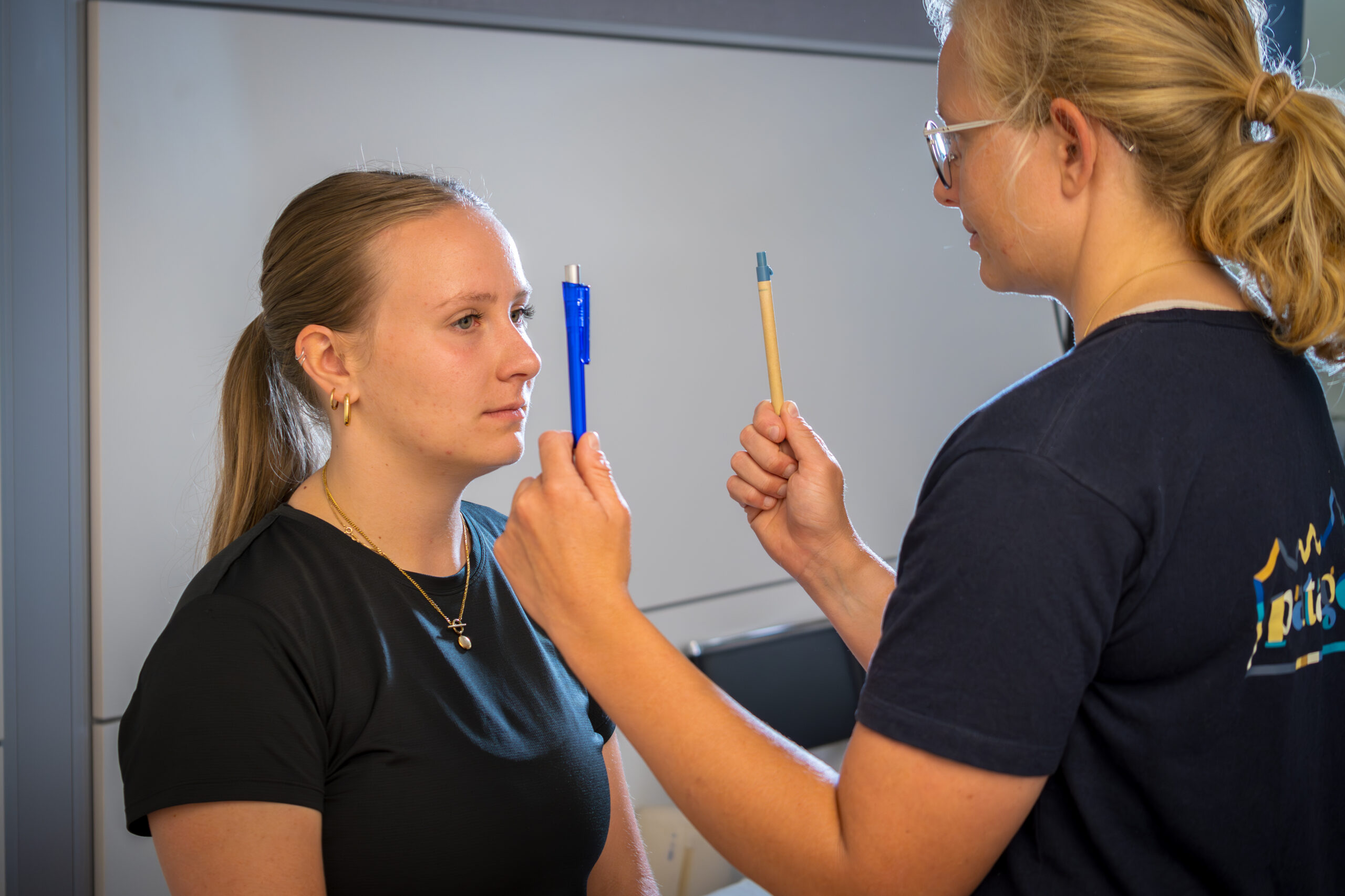
In this case, the VOMS showed mild findings. VOMS is a screening tool for vestibular and oculomotor function. I look at how eye movements, convergence and head movements are tolerated.
Two areas were particularly relevant: convergence and the VOR. The VOR keeps vision stable while the head is moving. When this system is still sensitive after a concussion, head movement may trigger dizziness, headache or the feeling that vision is not completely stable.
Convergence can also matter. Reading, a smartphone or computer work may then become tiring much faster. One test never explains the whole problem, though. It is one piece of the picture.
Read more about dizziness and vestibular physiotherapy in Basel
Balance and the neck may be part of the picture
After concussion, I also assess balance and the cervical region when the symptoms suggest it. A fall or impact can leave neck problems alongside the concussion itself.
This is clinically important because headache, dizziness and a feeling of instability do not always come from one single system. More than one factor can be involved. When that happens, rehabilitation should reflect it.
How well does the body tolerate exercise?
Exercise tolerance was another part of this assessment. A standardised test such as the Buffalo Concussion Treadmill Test can help evaluate the response to gradually increasing effort.
The aim is not to push someone to maximal exhaustion. Load increases in a controlled way while heart rate, symptoms and recovery are monitored. That information can then help guide the dose of aerobic exercise.
Recent evidence has changed practice substantially. A 2023 systematic review and meta analysis included 46 studies. Early light physical activity and prescribed aerobic exercise were associated with faster recovery. In the meta analysis, the average difference was about 4.6 days.
Why concussion rehabilitation is not the same for everyone
Physiotherapy after concussion can look very different from one person to another. Dizziness may dominate in one case. In another, neck pain, exercise intolerance or visual symptoms may be the main limitation.
Depending on the assessment, rehabilitation may combine gaze stability, convergence, balance, cervical treatment and aerobic exercise. The return to work, school and sport is then progressed step by step.
A 2026 network meta analysis included 20 randomised trials and 1320 participants. Multidisciplinary approaches performed particularly well. Combinations of vestibular rehabilitation and sub symptom aerobic exercise were also among the most effective strategies.
For vestibular symptoms after mild traumatic brain injury, a 2024 meta analysis also found an improvement in dizziness related disability with vestibular rehabilitation.
When is it really safe to return to sport?
Having no headache at rest is a good sign. It is not always enough.
Before returning to a sport with risk of falling, contact or high speed, the person should also tolerate physical exertion, head movement and sport specific tasks. The international Amsterdam consensus recommends a gradual return and emphasises that symptoms, clinical findings and response to exertion should be considered together.
The practical question becomes less how many days have passed? and more what can the body do again without a meaningful return of symptoms?
When is urgent medical assessment needed?
Concussion should be considered in a medical context. A rapidly worsening severe headache, repeated vomiting, a seizure, major change in consciousness, new weakness or another new neurological sign requires prompt medical assessment.
Concussion physiotherapy in Basel
In my Basel practice, a concussion assessment may include vestibular function, eye movements, balance, the cervical region and exercise tolerance.
The goal is not to collect as many tests as possible. It is to understand why daily life or sport is not yet working normally, then build a clear plan from that information.
Read more about concussion rehabilitation in Basel
Common questions
When can physiotherapy help after concussion?
It can be useful when symptoms remain with movement, screens, head movement, exercise or sport. Treatment depends on what the assessment actually finds.
Should I rest completely after a concussion?
After a short period of relative rest, a gradual return to light activity is now generally recommended. The amount of activity should remain controlled and matched to the person’s response.
How long does recovery take?
It varies a lot. Some people recover quickly. Others need longer, particularly when several systems are involved or symptoms have already been present for several weeks.
Scientific references
Li et al., 2026, network meta analysis of 20 randomised trials and 1320 participants
Leave a Reply