
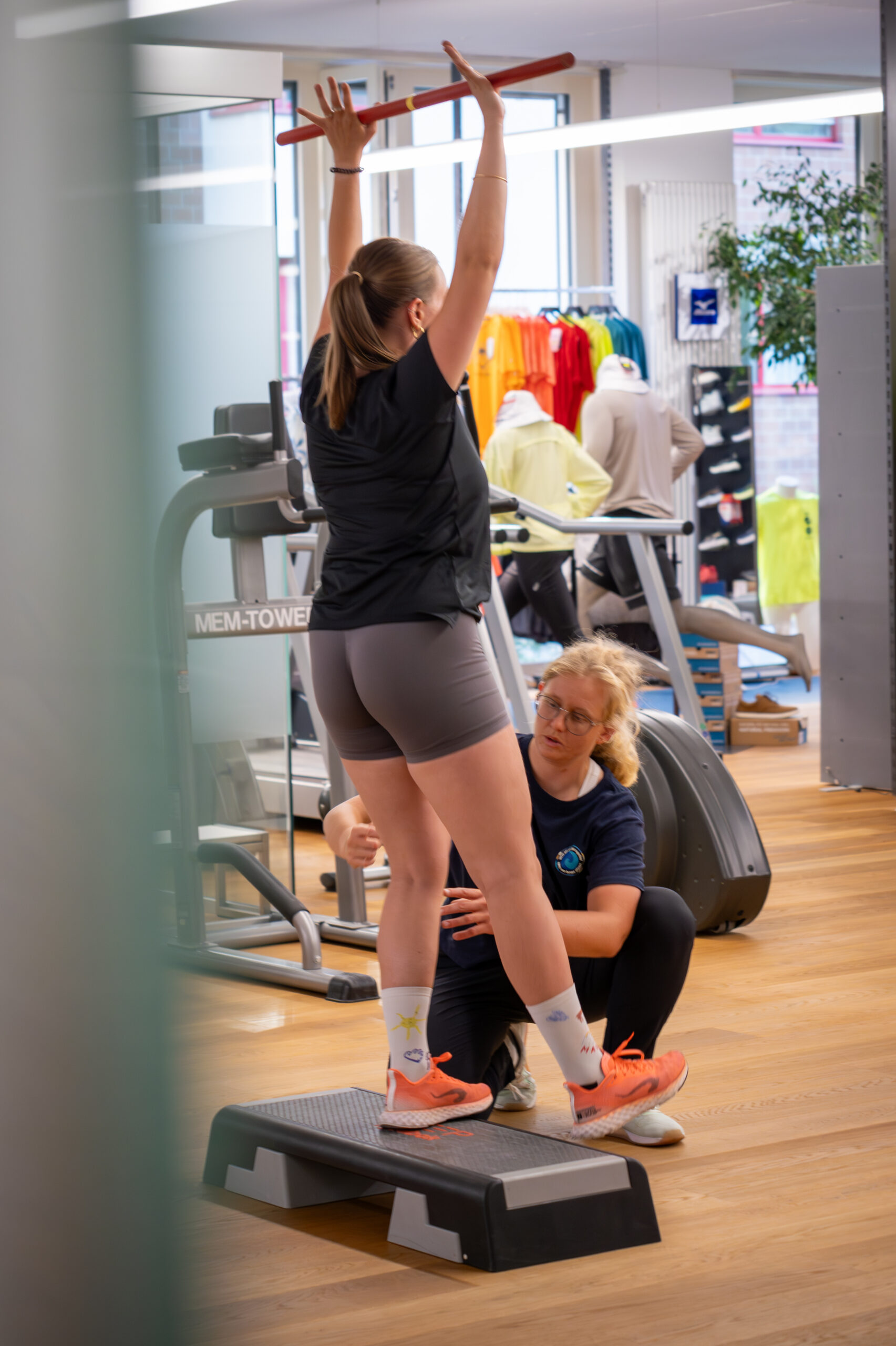
A young athlete feels pain just below the kneecap when sprinting, jumping or kneeling. During growth, this can be Osgood-Schlatter disease, irritation at the developing point where the patellar tendon attaches to the shinbone. The name sounds alarming, but it does not mean the knee is broken.
Symptoms are real and can last for months. The aim is to find a tolerable level of activity and progressively restore the young person’s ability to play.
Why does this area hurt during growth?
The tibial tubercle under the knee is still developing. Repeated forces from the thigh muscles through the patellar tendon may exceed what the tissue currently tolerates. Running, jumping, accelerating and rapid changes of direction can increase symptoms. A visible bump may remain; its size alone does not predict pain or when sport is safe.
The diagnosis is usually based on the story and examination. Imaging may be needed when the presentation is unusual or another injury is suspected. A sudden severe pain with inability to straighten the knee is a different situation and needs prompt medical assessment.
Does the teenager need to stop all sport?
A long period of complete rest is usually unnecessary. Temporarily reduce the most provocative activities, such as repeated jumps, sprints or tightly packed training sessions, while maintaining activities that are better tolerated. Pain later that day and the next morning helps adjust the dose. Increasing pain across sessions, limping or daily-life limitations call for a change of plan.
In a prospective study of 51 adolescents, education, activity modification and progressive strengthening were associated with improvement. This was not a comparison trial and cannot predict the outcome for an individual teenager.
What can rehabilitation include?
- Work with the teenager and family to plan training and manage competition demands.
- Strengthen the quadriceps, hips and whole leg progressively at a tolerated level.
- Reintroduce faster running, jumps, landings and changes of direction step by step.
- Check sleep, fatigue and other recent changes in training load.
The guide to strength training for children and teenagers explains how supervised exercise can begin during youth. Sports physiotherapy in Basel can help tailor the progression and reassess the knee.
A sharp pain during a jump, a snap followed by inability to straighten the knee, major swelling or inability to bear weight requires prompt medical assessment. An uncommon avulsion injury must be distinguished from typical Osgood-Schlatter pain.
Frequently asked questions
Will Osgood-Schlatter automatically disappear when growth stops?
Symptoms often improve with time, but they may persist for months. Adjusting training and rebuilding strength can help during that period.
Can my child play a match with knee pain?
That depends on pain, limping, function and symptoms after sport. Pain that grows and lasts indicates the load should be reduced or changed.
Should the knee be immobilised?
Usually not for typical Osgood-Schlatter pain. Sudden or unusual symptoms need assessment to rule out a different injury.
Leave a Reply