
After knee surgery, the first weeks often raise more questions than answers. How much should I move? When should physiotherapy start? Is the swelling normal? And when does “recovery” start to mean walking normally again (then cycling, running or returning to sport)?
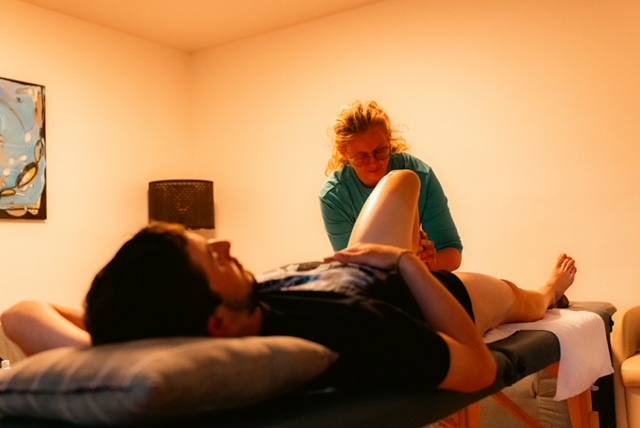
There is no single rehabilitation plan that fits every knee operation. ACL reconstruction, meniscus surgery, cartilage procedures and knee replacement all have different biological healing times and loading limits. Rehabilitation therefore has to respect both the surgeon’s restrictions and your actual clinical progress.
In my physiotherapy practice in Basel, the early phase is about restoring movement, muscle activation and confidence without pretending biology can be rushed. The goal is not to “speed up” the knee at all costs. It is to create the conditions for steady progress (and avoid losing time later because we pushed too hard too early).
💡 Before going further, one important point:
After surgery, your surgeon will usually provide a post-operative rehabilitation protocol. This may be written directly on your physiotherapy prescription or provided as a separate document.
Take the time to read it carefully and revisit it regularly.
Make sure your physiotherapist also has a copy and never hesitate to ask questions if something is unclear.
This helps create a safe, consistent and effective rehabilitation plan.
👉 Want to optimise your recovery after knee surgery?
Starting physiotherapy at the right time and progressing according to your operation can make a meaningful difference. You can read more about my approach to sports physiotherapy in Basel.
1. Start rehabilitation at the right time for your surgery
For many knee procedures, rehabilitation starts early. But “early” does not mean doing everything immediately. The exact progression depends on the operation, tissue healing and the surgeon’s instructions.
In the first phase, physiotherapy often focuses on priorities such as reducing unnecessary stiffness, restoring extension and flexion within the allowed range, regaining quadriceps activation and improving basic function.
After ACL reconstruction, for example, modern rehabilitation guidelines support early progressive rehabilitation rather than prolonged immobilisation, while meniscus or cartilage procedures may require different loading restrictions.
2. Use swelling and pain as information, not as the only target
Some swelling and pain are expected after surgery. The goal is not to eliminate every sign of inflammation. What matters is whether symptoms remain compatible with movement, sleep and progression (and whether the knee settles again after loading).
Cold can be useful for short-term comfort or pain relief if you find it helpful. It is one option among others, not the core of rehabilitation. Positioning, appropriate movement, medication prescribed by your medical team and load management may all contribute to symptom control.
3. Rebuild quadriceps function early and progressively
After knee injury or surgery, the quadriceps can become surprisingly difficult to activate. This is not just deconditioning. Joint injury and swelling can inhibit muscle activation through a recognised neurophysiological mechanism called arthrogenic muscle inhibition.
Early rehabilitation therefore often includes simple quadriceps activation and progressively more demanding strength work as soon as the procedure allows. The important point is progression: exercise should evolve from activation to meaningful strength, then to the capacities required for work, daily life or sport.
Reference: review on arthrogenic muscle inhibition after knee injury and surgery.
4. Focus on restoring a natural walking pattern
Crutches are often necessary after surgery, but the way you walk remains extremely important.
Without attention, compensations quickly appear:
- limping
- asymmetrical loading
- avoiding weight-bearing on the operated leg
At first, these habits may seem harmless.
Over time, however, they can slow recovery and create secondary pain.
👉 Restoring a smooth and balanced gait is a key part of successful rehabilitation.
5. Stay active (in an adapted way)
After surgery, many people are afraid to move.
Still, the body needs movement to recover properly.
The goal is not to return immediately to full sport participation, but rather to:
- maintain cardiovascular fitness
- reduce muscle loss
- support overall recovery
Most importantly, physical activity should always be adapted to your current stage of healing.
A structured rehabilitation programme in sports physiotherapy Basel helps guide this progression safely.
Key takeaways after knee surgery
- follow the restrictions specific to your operation;
- restore motion and muscle activation progressively;
- use pain and swelling to guide load rather than chasing a perfectly symptom-free knee at every stage;
- relearn a comfortable walking pattern when weight-bearing is allowed;
- build strength and general activity progressively toward your real goals.
Frequently asked questions after knee surgery
When should physiotherapy start after knee surgery?
For many procedures, physiotherapy begins early, but the exact timing depends on the operation and the surgeon’s restrictions. The priority is to start at the right time for the tissue that was repaired, not simply as early as possible.
How much swelling is normal?
Some swelling is expected after surgery. What matters is the trend: swelling that progressively increases, remains very reactive after each session, or is accompanied by unusual pain, redness, fever or calf symptoms should be reassessed.
When can I cycle again?
Stationary cycling may sometimes be reintroduced relatively early once the required range of motion and loading permissions are present. Outdoor cycling comes later because balance, braking and fall risk also need to be considered. If cycling is an important goal, see also my article on cycling knee pain and rehabilitation.
Knee rehabilitation in Basel
If you are recovering from knee surgery in Basel, the rehabilitation plan should reflect both your procedure and what you want to return to: everyday walking, work, hiking, cycling, skiing or competitive sport.
You can read more about my approach on the sports physiotherapy in Basel page and the endurance and outdoor physiotherapy page.
Article by Millie Brecheisen, physiotherapist in Basel with a focus on sports rehabilitation and return to sport. Learn more about my professional background.
Leave a Reply