
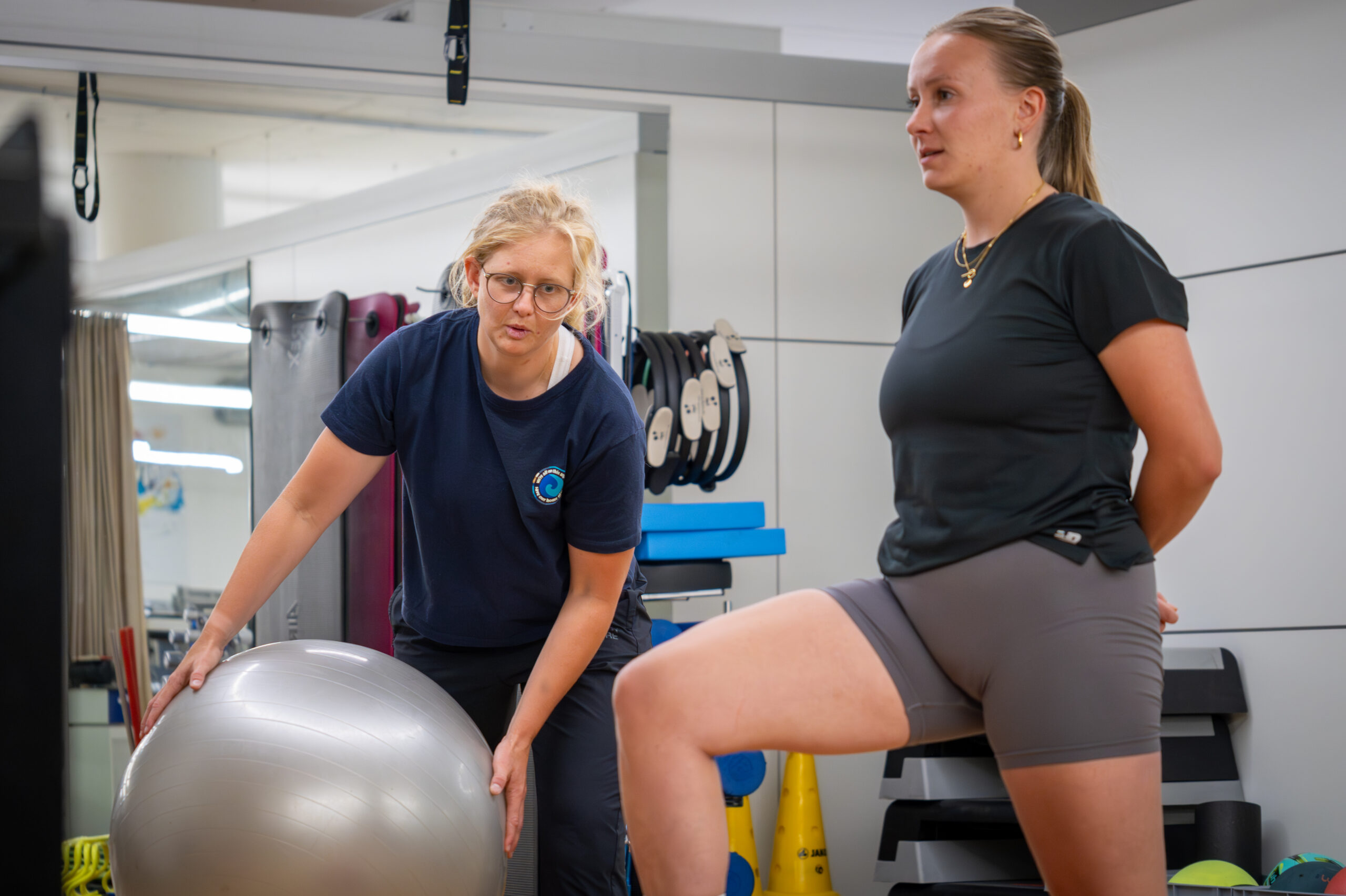
“When can I run again?” is one of the first questions after ACL reconstruction. Jumping, changing direction and returning to sport follow. Tissue healing takes time, but two people operated on in the same month may have very different strength, knee responses and movement control.
Time matters, but it is not a clearance test
A 2024 systematic review found an association between an earlier return and a second ACL injury, but the average difference was small and the certainty of evidence very low. It cannot establish a universal safe month. Return to activity, return to training and return to performance are distinct stages.
Decisions should consider the knee’s current function, the athlete’s sport and the response to gradually increasing load. The treating surgeon’s restrictions also matter, particularly when other structures were repaired.
What comes before running?
Usually the knee needs little or no swelling, adequate range of motion, manageable pain, sound walking and stair climbing, enough quadriceps and whole-leg strength, and control during single-leg tasks. A clinician can then build from brisk walking to short jog intervals, continuous easy running and later faster work.
The exact side-to-side percentage required at every stage is debated. The other leg can also lose strength during rehabilitation, so 90% symmetry alone can hide an overall weakness. Absolute strength and the way a person moves provide additional information.
Jumps, landings and cutting ask different questions
Hop tests show aspects of force production and landing, but a single score is not a reliable prediction of reinjury. Observe how the knee absorbs force, whether movement quality changes with repetitions, and how confident the athlete feels. A review of isolated functional tests illustrates the limits of relying on one measure.
- Rebuild maximal strength and the ability to produce force quickly.
- Progress from simple jumps and landings to repeated and multidirectional tasks.
- Practise braking, planned turns and then reactive changes of direction.
- Add sport-specific decisions, fatigue and supervised integration into training.
Psychological readiness is relevant alongside physical tests. A review of psychological readiness relates it to return-to-sport outcomes, but confidence cannot replace strength and movement assessment. A footballer, skier or BMX rider needs the demands of their own sport in the plan.
Making the final return-to-sport decision
No test is a once-and-for-all pass. The team combines recovery time, medical guidance, knee symptoms, physical capacities and real training exposure. For related knee issues in young athletes, see meniscus injury during growth. Sports physiotherapy in Basel can help organise the progression and an appointment.
Frequently asked questions
Can I run six months after ACL surgery?
Six months alone is not a decision rule. Knee motion, swelling, quadriceps strength, single-leg control and tolerance of increasing load must also be assessed.
Do I need 90% symmetry before returning to sport?
Symmetry helps, but the uninjured leg may also be weak. Consider absolute strength, landing quality, hop tests and the demands of the sport.
When can cutting movements start after ACL reconstruction?
After an adequate foundation of strength, running, braking and movement control. Start with planned simpler turns, then progress to faster and reactive tasks.
Leave a Reply