
VESTIBULAR PHYSIOTHERAPY IN BASEL
Dizziness, balance and vestibular rehabilitation in Basel
Understand what may be driving your symptoms and progressively regain confidence with movement and everyday activities.
You feel dizzy (but what does “dizziness” actually mean?)
People use the word “dizziness” to describe very different sensations. For some, the room clearly spins. For others, it is much harder to pin down: unsteadiness, light-headedness, floating, swaying, difficulty walking straight or vision that seems to move when the head turns. Those differences are clinically useful.
Those differences matter because they point in different directions. The inner ear and vestibular system may be involved, of course, but they are not the only possibilities. Vision, the nervous system, multisensory balance processing, cardiovascular factors or the cervical spine can all contribute (sometimes more than one at the same time).
My role has two sides. First, use a targeted functional assessment to identify what can realistically be addressed with physiotherapy. Second, recognise when another medical or specialist assessment is more appropriate. A good assessment should narrow the possibilities (not force every symptom into one explanation).
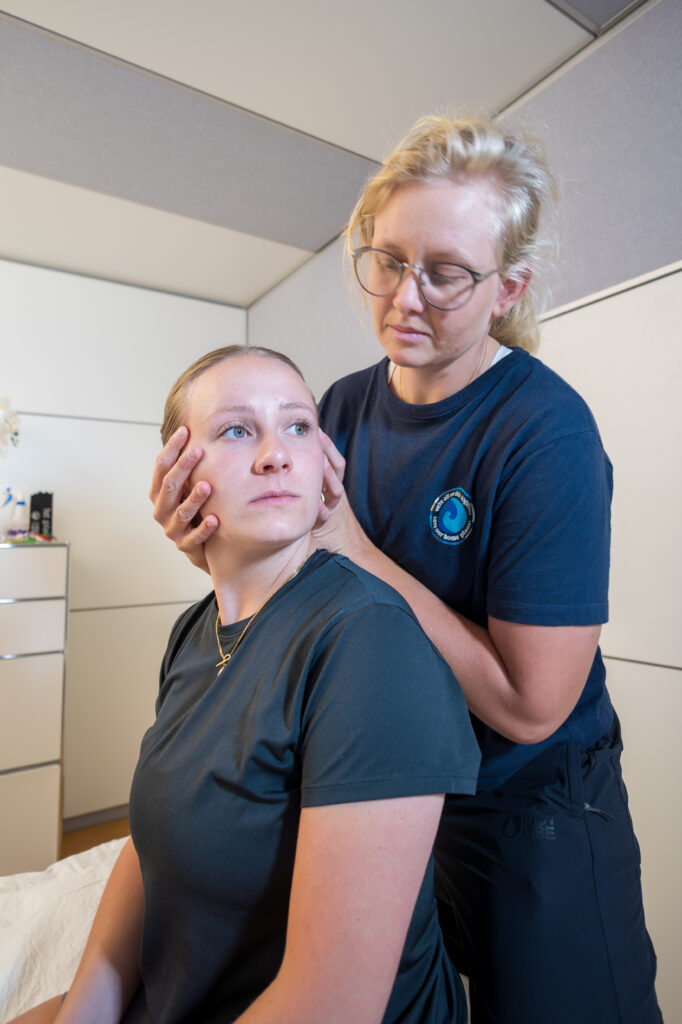
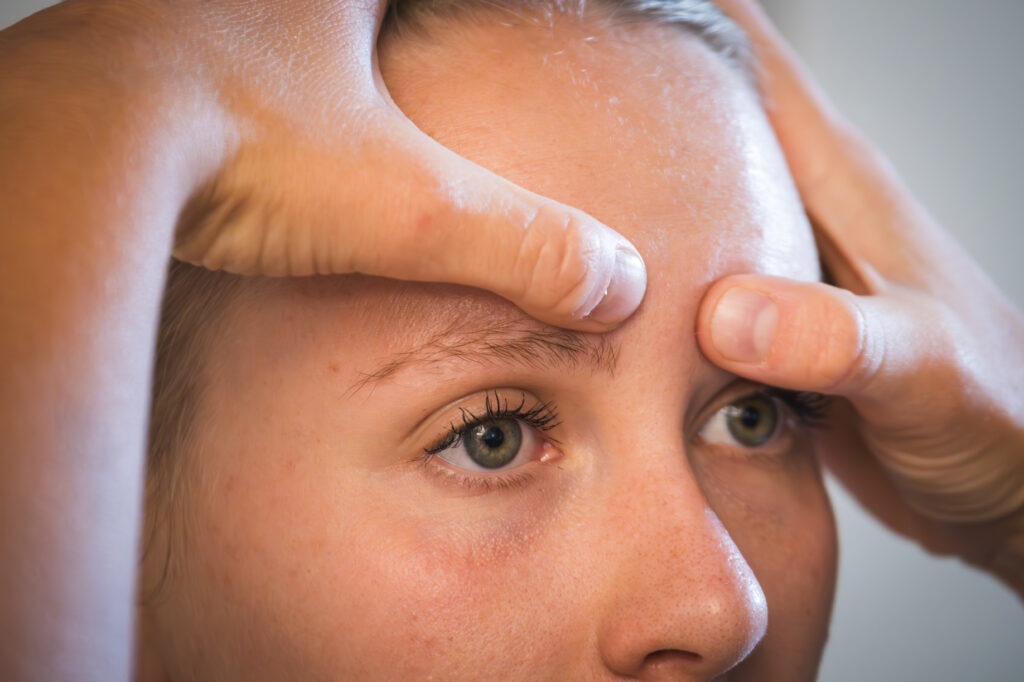
Symptoms people commonly come to see me with
Vestibular problems do not feel the same for everyone. Some symptoms last only seconds and appear in one specific position. Others show up while walking, turning the head or standing in a visually busy supermarket. The pattern matters.
- vertigo when turning in bed, lying down or getting up;
- unsteadiness while walking;
- dizziness or blurred vision with head movement;
- difficulty in the dark or on uneven ground;
- discomfort in shops, crowds or with certain screens;
- a persistent floating or rocking sensation;
- nausea or motion sensitivity;
- balance problems after a concussion or trauma.
These symptoms alone do not establish a diagnosis. What matters is the pattern around them: how long they last, what triggers them, how they evolve and which other symptoms appear alongside them.
COMMON CAUSES AND CLINICAL SITUATIONS
Similar symptoms can have very different causes
BPPV (benign paroxysmal positional vertigo)
Short episodes of spinning are triggered by certain head positions. Positional tests help identify the affected canal and, when BPPV is confirmed, an appropriate repositioning manoeuvre can be used.
Vestibular hypofunction / after vestibular neuritis
After a peripheral vestibular problem, the brain may need time and targeted practice to adapt to head movement and to signals coming from the inner ear.
Vestibular migraine
Dizziness and motion sensitivity can be associated with migraine, with or without headache. Physiotherapy may help address functional consequences alongside medical management.
PPPD (persistent postural-perceptual dizziness)
Persistent rocking, floating or unsteadiness may worsen with standing, movement and visually complex environments. Management can include graded exposure and appropriately dosed rehabilitation.
After concussion or trauma
A concussion may involve vestibular, oculomotor, cervical, autonomic or migraine-related components. The assessment therefore needs to be broader than an inner-ear examination alone.
Multifactorial balance problems
In some people, several systems contribute: vision, proprioception, vestibular function, strength, coordination, medication or cardiovascular factors. The aim is to identify what can realistically be improved.
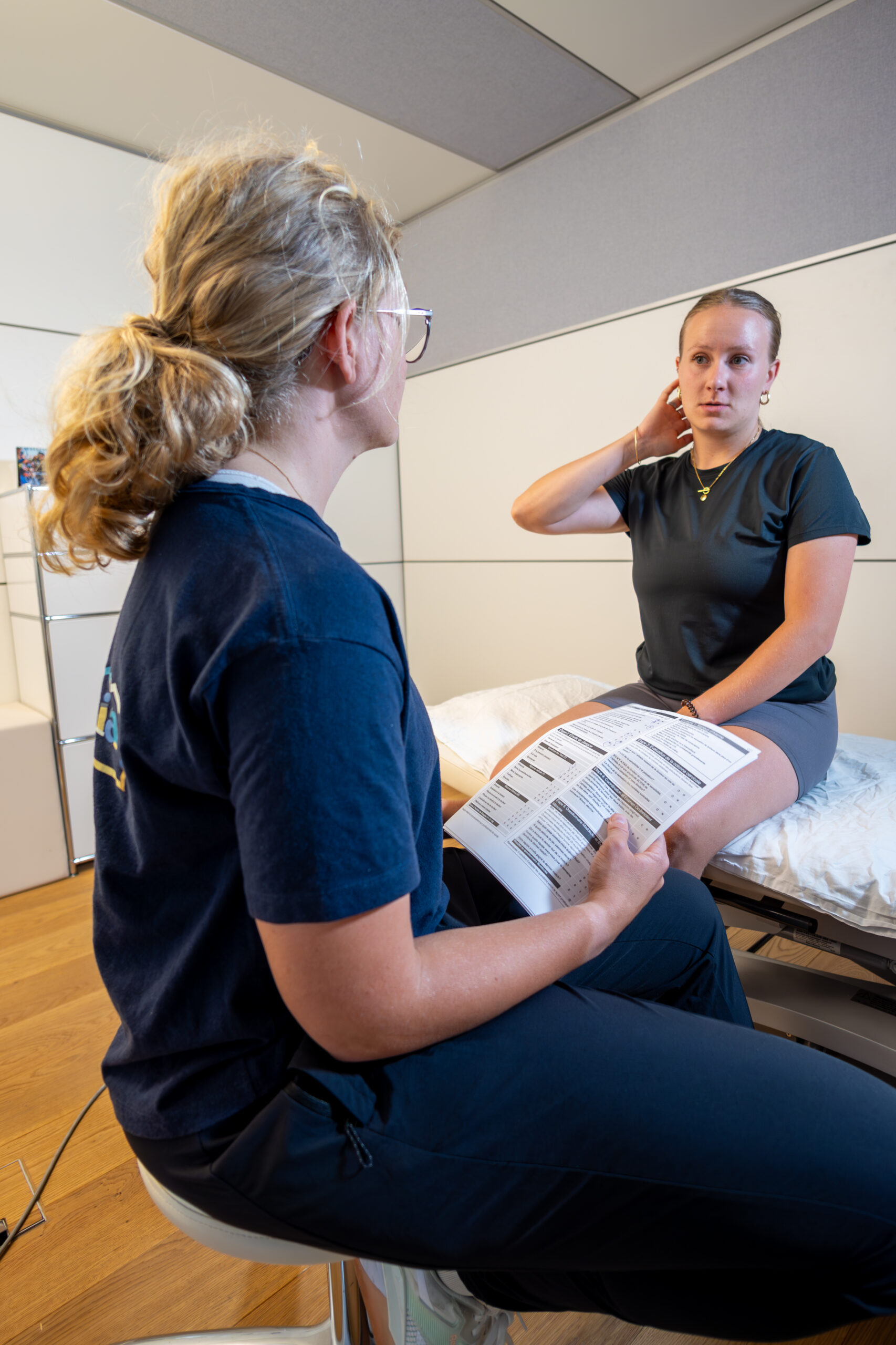
Vestibular assessment: understand before treating
01. Your history and symptoms
When do symptoms appear? How long do they last? What triggers them? Are there associated hearing, visual, neurological, cervical or migraine-related symptoms?
02. Test the relevant systems
Depending on the situation: positional testing, eye movements, gaze stability and the vestibulo-ocular reflex, motion sensitivity, static and dynamic balance, visual-vestibular interaction and postural control.
03. Broaden the assessment when needed
When symptoms suggest it, I may also include cervical assessment, proprioception, oculomotor components or the cardiovascular response to standing.
Not every patient needs every test. The assessment is selected according to your history and the findings during examination.
Rehabilitation depends on what the assessment finds
Repositioning manoeuvres
For certain forms of BPPV, treatment mainly involves identifying the affected canal and performing the appropriate manoeuvre.
Gaze stability and vestibular adaptation
Progressive exercises may be used when head movement provokes symptoms or vision becomes unstable during movement.
Habituation and graded exposure
When movement or visually busy environments provoke symptoms, exposure can be rebuilt gradually at a dose matched to your tolerance.
Balance, walking and physical activity
Rehabilitation may also include balance tasks, changing surfaces, walking, combined movements and a gradual return to everyday activity or sport.
Exercises should provide enough stimulation for adaptation without turning every session into an ordeal. Difficulty is adjusted according to your response.
Balance is a team effort
The brain continuously combines different sources of information to understand where the body is and to maintain stability. The contribution of each source changes depending on the situation.
On a stable surface in good light, vision can provide a great deal of support. In the dark or on uneven ground, the brain must rely on and weigh sensory information differently. Strength, coordination, attention, mobility and cardiovascular function can also influence balance. This is why two people who both describe “dizziness” may need very different rehabilitation strategies.
When is medical assessment necessary?
Vestibular physiotherapy does not replace medical investigation when it is indicated. Sudden-onset dizziness accompanied by new neurological symptoms, sudden hearing loss or other unusual signs requires prompt medical assessment.
If the assessment does not fit a problem that is primarily appropriate for physiotherapy, I will direct you to the relevant healthcare professional.
Frequently asked questions about dizziness and vestibular rehabilitation
Can BPPV be treated in one session?
Sometimes, but not always. It depends on factors including the affected canal, the course of symptoms and the response to the manoeuvre.
Should vestibular exercises provoke symptoms?
A mild, temporary increase in symptoms may be appropriate during some adaptation or habituation exercises. The dose should remain controlled and matched to your response.
Can I have dizziness without an inner-ear problem?
Yes. Dizziness and unsteadiness can have many causes, and several mechanisms may be present at the same time.
Can my neck contribute to dizziness?
A cervical component can sometimes be associated with symptoms, particularly after trauma. It should be assessed within the overall clinical picture rather than automatically assumed to be the cause.
Do you treat dizziness after concussion?
Yes. After a concussion, assessment may include vestibular, oculomotor and cervical systems as well as exercise tolerance.
Do I need a medical prescription?
A medical prescription is generally required for physiotherapy to be reimbursed by Swiss health or accident insurance. Private consultations are also possible depending on the situation.
Are you avoiding certain movements or environments because you are worried they will trigger symptoms?
An initial assessment can help clarify what is provoking your difficulties and whether vestibular physiotherapy is appropriate.
You may also be interested in
Read more about concussion rehabilitation, explore the full physiotherapy services in Basel, or go directly to booking information.
Contact & Appointments
Physio-Sport Brecheisen – Basel
Do you have a question or would you like to book an appointment?
I am happy to answer your questions and support you throughout your rehabilitation. You can contact me by phone, email or WhatsApp.

Phone number
Address
Open hours
Tuesday to Friday : 08h00 – 18h00
Tuesday and Thursday : open until 20h00