
By Millie Brecheisen, physiotherapist in Basel. Updated: 1 October 2026.
‘My neck is making me dizzy.’ The neck may contribute, but a tense neck and dizziness occurring together do not establish the link. Assessment needs to understand what happens during movement and check other possible causes.
A plausible link, but a difficult diagnosis
Many referrals mention dizziness associated with neck tension, or patients arrive believing the neck explains everything. A connection is plausible: neck proprioceptors help orient the head and interact with vision and the vestibular system. Disturbed neck information may therefore contribute to a sensory mismatch [1, 2].
However, no single test proves that dizziness comes from the neck. Recent publications emphasise the controversy surrounding this diagnosis and the need to exclude relevant vestibular, neurological and cardiovascular causes [2].
What makes a neck contribution more plausible?
The pattern is more coherent when dizziness changes alongside neck pain or stiffness, appears after trauma or mechanical overload and accompanies neck sensorimotor deficits. People often describe unsteadiness or disorientation rather than the brief spinning typical of BPPV.
Neck pain occurring at the same time is still insufficient. Someone may have vestibular migraine and a tense neck, or a vestibular problem that leads them to stiffen the neck as a secondary strategy.
What the assessment can examine
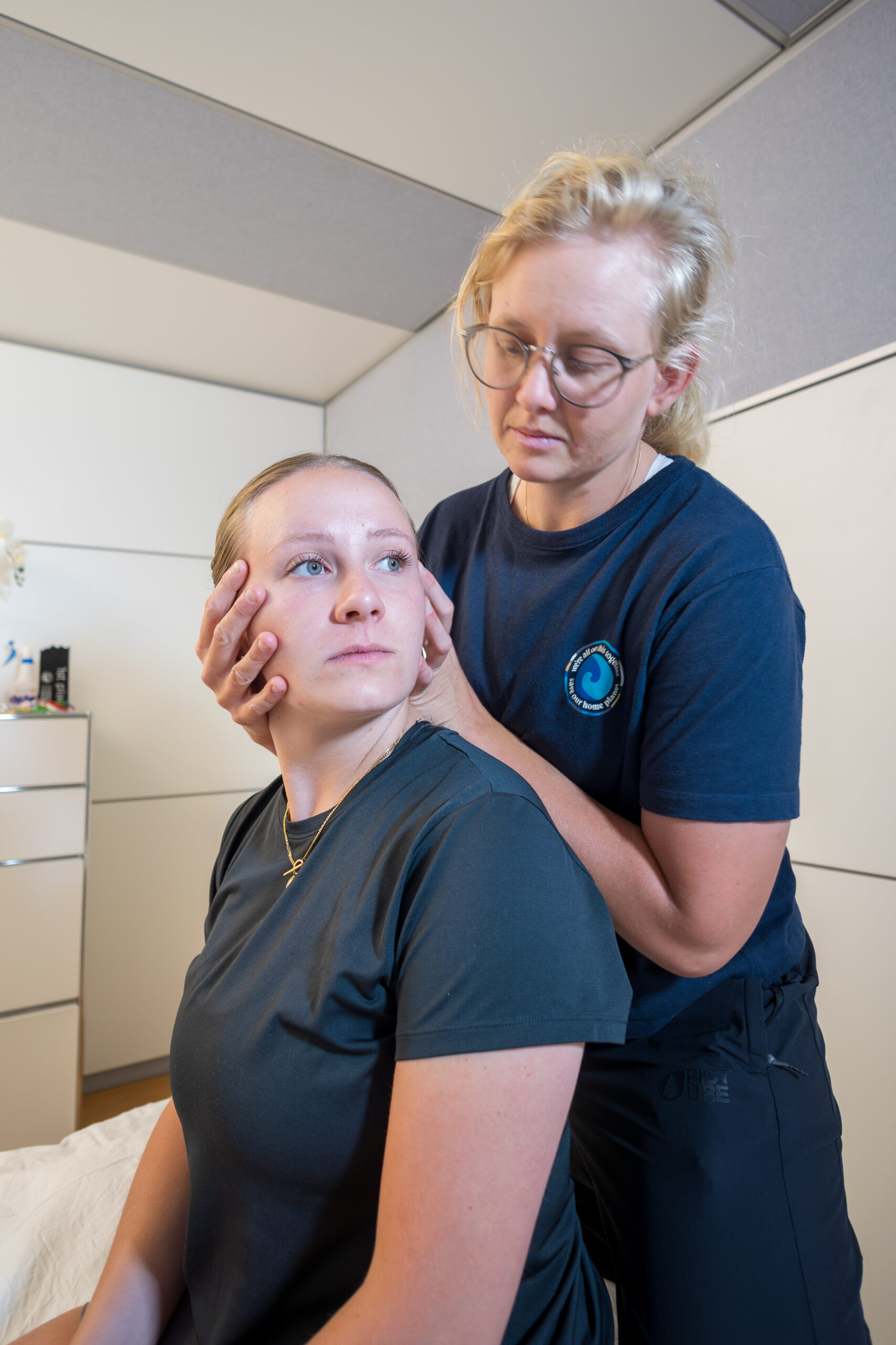
A careful assessment combines a vestibular history with a neck examination. Mobility, pain, motor control, joint position error, responses to head movement, balance and vestibular tests are interpreted together. Following trauma, concussion and eye movement problems also need consideration.
This avoids repeatedly treating the neck without checking why the person is dizzy.
Treatment involves more than massage and heat
Therapy may include mobility work and manual treatment when indicated, alongside neck sensorimotor control, eye and head coordination, balance, strengthening and gradual return to movement. A 2025 systematic review found a possible favourable effect of manual therapy on dizziness and neck mobility, mainly in the short term. Lasting effects remain uncertain [3].
Any coexisting vestibular deficit also needs treatment. The useful working diagnosis may therefore involve both neck and vestibular contributions.
When muscle tension does not explain the presentation
Continuous acute vertigo, neurological signs, sudden hearing loss, fainting, double vision or a new inability to walk require a different approach. A painful neck must never obscure an urgent presentation.
Clinical points that help make sense of the assessment
Useful clues include a consistent time relationship between neck pain or dysfunction and dizziness, without a single confirmatory test. Joint position error, mobility, sensorimotor control and vestibular tests support clinical reasoning. Neck symptoms and dizziness improving together strengthen the hypothesis, but do not prove it alone.
Separating neck contributions from other systems
At the first appointment, explain how symptoms change together. Timing alone does not prove that the neck causes the dizziness.
- Does dizziness follow flares of neck pain?
- Does it also happen without pain, in bed, on standing or in shops?
- When neck movement improves, do the activities that caused dizziness become easier too?
Assessment may identify several contributors. Neck treatment does not replace treatment for BPPV, vestibular migraine or hypofunction when these are present.
A physiotherapy assessment in Basel
In Basel, combining neck and vestibular assessment helps select the components to address. Describe your pain, triggering positions and history of dizziness. If another cause is suspected, additional medical assessment is needed before continuing targeted exercises.
Frequently asked questions
Can a tight trapezius muscle cause dizziness?
Isolated trapezius tension is not a sufficient explanation. The wider neck context and possible vestibular or medical diagnoses need assessment.
How do you distinguish neck related dizziness from BPPV?
BPPV typically produces short positional vertigo with characteristic eye movements. Cervicogenic dizziness is more closely associated with pain and neck control, without one definitive diagnostic test.
Is neck manipulation necessary?
No. Treatment can involve active exercise, sensorimotor training and vestibular rehabilitation. The choice depends on the assessment and contraindications.
Related articles
- Dizziness and vestibular rehabilitation in Basel
- Dizziness after whiplash: assessing the neck, eyes and balance
- Dizziness after concussion: vestibular, visual, neck or exercise related?
- BPPV: brief spinning when lying down or turning your head
Scientific references
[1] Gill-Lussier J et al. Proprioceptive Cervicogenic Dizziness Care Trajectories in Patient Subpopulations: A Scoping Review. J Clin Med. 2023. Read the reference on PubMed.
[2] De Hertogh W et al. Dizziness and neck pain: a perspective on cervicogenic dizziness. Front Neurol. 2025. Read the reference on PubMed.
[3] Casado-Sánchez A et al. Effectiveness of manual therapy in dizziness intensity and cervical range of motion in patients with cervicogenic dizziness: A systematic review. Journal of Bodywork and Movement Therapies, 2025. Read the reference on PubMed.
This information explains possible mechanisms and rehabilitation options. Diagnosis and treatment depend on an individual assessment.
Leave a Reply