
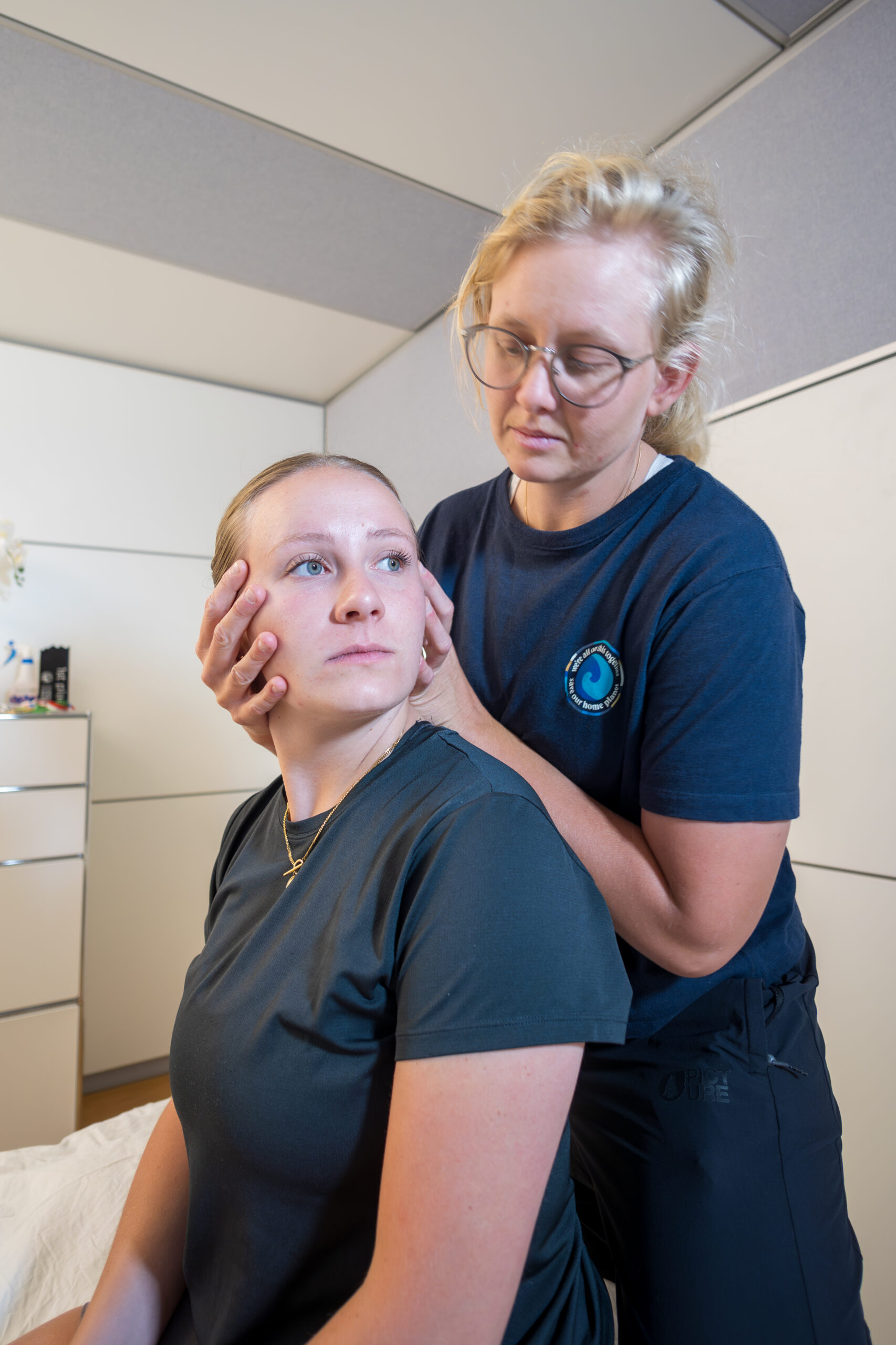
Dizziness can mean very different things. Some people feel that the room is spinning. Others describe floating, swaying or feeling less secure on their feet. For some, symptoms appear mainly with head movement, in a supermarket or while looking at a screen.
That is why physiotherapy for dizziness should not start with a standard list of exercises. The first step is to understand what the dizziness feels like, when it happens and which situations make it worse.
When can physiotherapy help with dizziness?
Vestibular physiotherapy can be useful in several situations. These include positional vertigo, vestibular hypofunction, symptoms after vestibular neuritis, balance problems, visual motion sensitivity and dizziness after concussion.
It can also be part of treatment for PPPD. In that situation, dizziness or unsteadiness is often present for a long time and tends to increase with standing, movement or visually busy environments.
One point remains important: not all dizziness comes from the inner ear. And not every form of dizziness belongs only in physiotherapy.
What does vestibular dizziness feel like?
The words people use are often very helpful. Some say the floor feels as if it is moving. Others notice that vision briefly feels unstable when they turn the head quickly. Some mainly feel less secure in the dark, on uneven ground or in a crowd.
These descriptions help guide the assessment. They suggest which systems are worth looking at more closely.
What is assessed when someone comes with dizziness?
Depending on the symptoms, I may look at gaze stability, eye movements, the response to head movement, static and dynamic balance, walking and tolerance of visual stimulation.
The VOR is often important. It helps keep vision stable while the head is moving. If that function is impaired or the system has not fully compensated, head movement may trigger dizziness, blurred vision or a feeling of instability.
When the history sounds like positional vertigo, positional tests may also be useful. If symptoms started after trauma, the cervical region and other factors can become relevant too.
Positional vertigo often has a recognisable pattern
With benign paroxysmal positional vertigo, episodes are often short but intense. Common triggers include turning in bed, lying down, getting up or looking upward.
If the assessment fits BPPV, targeted repositioning manoeuvres can be used. The correct manoeuvre depends on which canal is involved. One generic manoeuvre is not suitable for every form of positional vertigo.
Repositioning manoeuvres can also work in more complex cases. A 2023 systematic review and meta analysis included 22 studies with 5196 people with BPPV. Among them, 513 had more than one canal involved. In the analysable multiple canal cases, 58.9 percent were symptom free after one treatment, while others needed two or three sessions.
Why can vestibular rehabilitation briefly provoke dizziness?
Vestibular rehabilitation often works by gradually reintroducing movements and environments that are not being tolerated well. Head movement, gaze stability, balance and visual stimulation can therefore be used in a controlled way.
The goal is not to create as much dizziness as possible. The useful dose usually sits somewhere in the middle. There needs to be enough challenge for adaptation without leaving the person unable to function for hours afterward.
For peripheral vestibular hypofunction, the evidence is strong. An updated clinical practice guideline published in 2022 was based on 67 critically appraised studies and clearly recommends vestibular rehabilitation for both unilateral and bilateral hypofunction.
Dizziness in supermarkets, crowds or on screens
Large shops, train stations, movement around you, scrolling on a phone or certain videos can become surprisingly uncomfortable. Nothing may actually be spinning, yet the environment still feels difficult to process.
Treatment does not always mean avoiding those situations. They are usually reintroduced progressively. Depending on the findings, head movement, balance, gaze stability and visual exposure can be combined.
For PPPD, the evidence is less robust than it is for peripheral vestibular hypofunction. Vestibular rehabilitation can be part of treatment, but it needs to fit the individual situation. I would not offer one standard exercise or promise the same result for everyone.
Should movement restart early after vestibular neuritis?
After vestibular neuritis, vestibular rehabilitation can be useful. A 2023 systematic review and meta analysis included twelve randomised trials and 536 people. For dizziness related disability, vestibular rehabilitation was comparable with corticosteroids at longer follow up. Combining both approaches also showed advantages over corticosteroids alone at several time points.
Progression still needs to fit the stage of recovery. The first few days are different from persistent symptoms months later.
What if dizziness started after concussion?
After concussion, dizziness can occur together with oculomotor problems, neck pain or poor exercise tolerance. The assessment then needs to be broader than an inner ear examination alone.
Read more about concussion rehabilitation in Basel
When should dizziness be assessed medically first?
New dizziness with difficulty speaking, new weakness, marked coordination problems, double vision, sudden hearing loss or an unusually severe new headache should be assessed promptly by a medical professional.
An unusual worsening pattern or symptoms that do not fit the expected course also deserve medical assessment.
What happens at the first appointment?
I start with the story. When did the dizziness begin? Does it spin or sway? How long do episodes last? Which movement or position triggers them? Are there hearing changes, headaches or a recent injury?
Then comes the targeted examination. Only after that do we decide which exercises or manoeuvres actually make sense.
Physiotherapy for dizziness in Basel
In my Basel practice, I treat people with dizziness, balance problems and vestibular symptoms. The assessment may include gaze stability, head movement, balance, walking, visual stimulation and positional testing when needed.
The goal is simple: get normal life back. Shopping. Working. Walking. Exercising. Without spending the day wondering what will trigger the next wave of dizziness.
Read more about dizziness and vestibular physiotherapy in Basel
Common questions
Can physiotherapy help with dizziness?
Yes, when a treatable vestibular or functional problem is involved. Evidence is particularly strong for peripheral vestibular hypofunction.
Can positional vertigo be treated with physiotherapy?
Yes. When BPPV is confirmed, repositioning manoeuvres can be selected according to the affected canal.
How long does vestibular rehabilitation take?
It depends on the cause. Positional vertigo can change very quickly. Vestibular hypofunction or PPPD often needs a longer rehabilitation process.
Scientific references
Hall et al., 2022, clinical practice guideline for peripheral vestibular hypofunction
Leave a Reply