
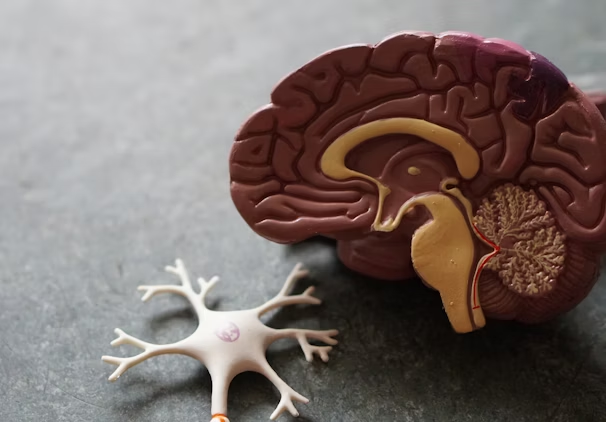
A concussion does not require a direct blow to the head. A fall or body impact can also transfer enough force to the brain. Loss of consciousness is not required either. Symptoms may involve balance, vision, concentration, sleep, exercise tolerance or the neck (often more than one at the same time).
In Basel, I hear two questions again and again: “Is it normal that I still have symptoms?” and “How can I return to activity without progressing too quickly or resting for too long?” There is no single answer. It depends on the symptom profile and where the person is in recovery.
What is a concussion?
A concussion is a mild traumatic brain injury that can temporarily alter brain function. Symptoms may appear immediately or over the following hours.
Possible symptoms include headache, dizziness, nausea, light or noise sensitivity, concentration difficulty, unusual fatigue, sleep changes or a feeling of being mentally “foggy”.
When is urgent medical assessment needed?
After a head injury, some warning signs require urgent medical evaluation. These include clearly worsening headache, repeated vomiting, seizures, increasing confusion, speech disturbance, marked drowsiness, difficulty waking the person, or new weakness or numbness.
If there is uncertainty after a recent head injury, medical assessment comes first.
Assessment is more than counting symptoms
The SCAT6 is one of the tools used after a suspected concussion, but it should not be interpreted in isolation. The Amsterdam international consensus recommends a broader clinical assessment adapted to the person’s presentation and recovery.
Depending on the situation, my physiotherapy assessment for concussion in Basel may include:
- symptoms and how they are changing;
- static and dynamic balance;
- the vestibular system and vestibulo-ocular reflex;
- eye movements and visual motion sensitivity;
- the neck and possible cervical contribution to headache;
- exercise tolerance, when appropriate, for example with a progressive Buffalo-style exertion test.
The aim is not to perform as many tests as possible, but to identify which systems are actually contributing to symptoms in that individual. Two people with the same diagnosis can therefore need very different rehabilitation plans.
Is complete rest necessary after a concussion?
No. Strict physical and cognitive rest until every symptom is gone is no longer the standard recommendation. A short period of relative rest (roughly the first 24 to 48 hours) is generally followed by an early, gradual return to daily activity and light exercise, as long as any symptom increase remains mild and temporary.
Walking or very light stationary cycling can therefore form part of recovery when there is no risk of falling, contact or another head impact. Sub-symptom threshold aerobic exercise can later become a specific treatment tool.
When is physiotherapy particularly useful?
Not every concussion requires prolonged rehabilitation. Many people recover well with good education, a progressive return to activity and appropriate medical follow-up. Targeted physiotherapy becomes particularly useful when specific symptoms persist or limit the return to daily life, work or sport.
- Dizziness or balance problems: vestibular rehabilitation and progressive exposure to movement.
- Visual or oculomotor symptoms: exercises adapted to the function that is actually impaired.
- Neck pain or headache: assessment and treatment when a cervical component is relevant.
- Exercise intolerance: progressive aerobic rehabilitation below marked symptom provocation.
- Persistent symptoms: multimodal assessment and, when needed, referral back to the physician or to neurology, ophthalmology or other professionals.
Return to sport: being symptom-free at rest is not enough
Return to sport happens in stages. First comes well-tolerated activity, then more intensity and sport-specific movement. Situations with meaningful risk of contact, collision or falling come last (not simply as soon as cardio feels fine again).
Before returning to higher-risk sport phases, the decision should consider not only symptoms at rest, but also exercise tolerance, relevant cognitive function and any clinical findings that remain. Medical clearance is required before stages involving contact, collision or substantial fall risk.
For cycling, skiing or BMX, for example, “doing cardio without symptoms” is not the same as being ready to return fully to the course or track. The final stage of rehabilitation should reproduce the actual demands of the sport.
Concussion rehabilitation in Basel
In my practice, I use an individualized approach that may combine symptom assessment, balance, vestibular and oculomotor function, cervical examination and exercise tolerance. When additional medical assessment is needed, I work with the relevant medical network.
For more detail, see my page on concussion rehabilitation in Basel. If dizziness is the main issue, you can also read about vestibular rehabilitation in Basel. For the wider return to activity and sport, see sports physiotherapy in Basel.
Frequently asked questions about concussion
How long does a concussion last?
Recovery varies from person to person. Some improve quickly; others are left with one or two symptoms that simply refuse to settle. When progress stalls, a targeted assessment can help answer a more useful question: what is still limiting recovery?
Can you exercise during concussion recovery?
Light, controlled activity can usually be reintroduced gradually after the initial period of relative rest, as long as there is no risk of another fall or impact. Full return to sport then follows a stepwise progression.
When should you see a physiotherapist after a concussion?
A physiotherapy assessment can be useful when dizziness, visual symptoms, neck pain, headaches, exercise intolerance or difficulty returning to normal activity remain. Physiotherapy complements medical follow-up by targeting the systems that are still affected.
Article by Millie Brecheisen, physiotherapist in Basel with a focus on sports physiotherapy, concussion and vestibular rehabilitation. Learn more about my professional background.
Last updated: September 2026.