
By Millie Brecheisen · Updated 17 November 2026.
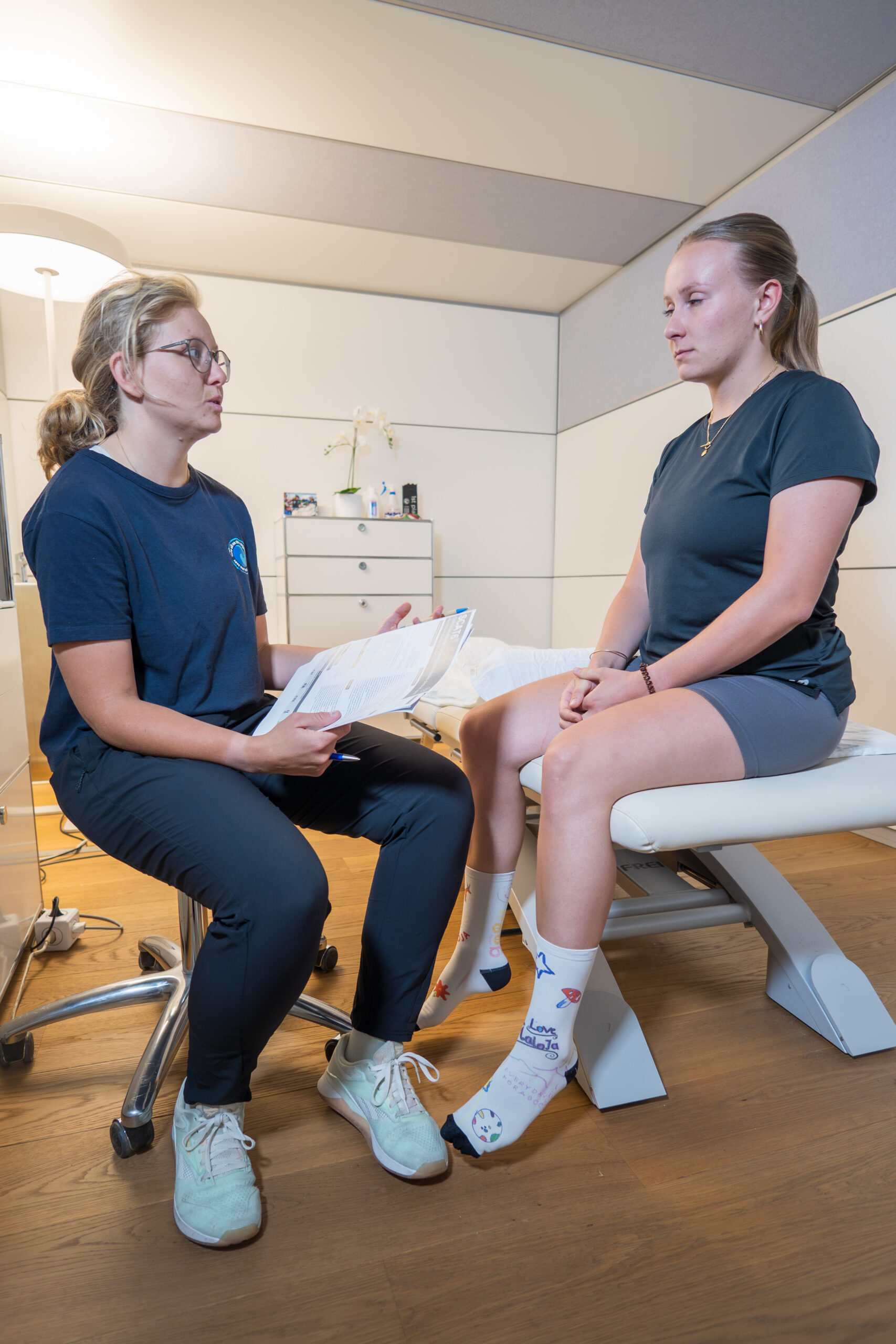
Your knee hurts, but you do not have a clear diagnosis. That does not make the symptoms imaginary, and it does not automatically require an MRI or operation. Physiotherapy can assess function, loading capacity and warning signs, then build a plan appropriate to the clinical picture and its progress.
When does medical assessment come first?
- Significant trauma with deformity or marked inability to bear weight.
- A hot, very red knee with fever.
- True locking, inability to actively extend the knee or rapidly increasing swelling after injury.
- Unexplained deterioration with systemic symptoms.
- A newly painful, swollen calf after surgery.
These examples are not exhaustive. They explain why exercise is not the immediate answer for every painful knee. Appropriate referral is part of a useful physiotherapy assessment.
What can be measured without an MRI diagnosis?
Range, swelling, strength, walking and personally important tasks can be assessed clinically. The history also considers training changes, work, sleep, recovery and goals. Stairs, squatting, running and cycling can provide different information. Clinical tests are interpreted together; no single test excludes every injury.
Imaging may be appropriate when it answers a question that changes management. The 2024 ESSR recommendations emphasise the relationship between images and the clinical context. An MRI does not measure your current strength reserve or sporting capacity. Conversely, a suitable conservative programme does not always need to wait for imaging.
Start with a testable working explanation
Where assessment supports conservative management, choose a few measurable goals and a tolerable movement dose. The plan may combine knee and hip strengthening, walking, cycling or temporary running changes. Selection should reflect symptoms and capacity rather than imposing one perfect posture on everyone.
For patellofemoral pain, the 2024 best-practice guide recommends education and knee-targeted exercise, with hip exercise where appropriate. Taping or movement adaptations may support an individual plan. That evidence concerns this clinical presentation, not every possible cause of knee pain.
For diagnosed osteoarthritis, the EULAR recommendations published in 2024 also support tailored exercise and self-management. Pain alone does not establish osteoarthritis, and movement should not be advertised as a way to repair every anatomical problem.
Adjust activity and measure what changes
Rather than simply advising “do less”, select a variable to change: duration, frequency, resistance or speed. A manageable starting dose can then progress. Symptoms during activity and the next-day response help distinguish an appropriate challenge from a sustained flare-up.
A practical goal might be easier stair climbing, followed by longer walks or rebuilding sports sessions. Every sensation does not automatically require stopping all training. The clinical picture, function and lasting response matter more than one isolated symptom.
Reassessment belongs in the plan
Agree on follow-up and concrete markers: better activity tolerance, less swelling, increasing strength or easier everyday movement. Worsening symptoms, new signs or a course that does not fit the initial explanation should prompt a revised assessment. Imaging or specialist review may then change what needs to happen.
The multidisciplinary anterior knee pain guideline illustrates the importance of reviewing treatment response and considering additional measures. Its suggested review points cannot be turned into one universal deadline for all knee conditions.
Frequently asked questions
Must I know the exact name of my injury before booking?
No. A functional assessment can be a useful starting point. Bring existing reports; the assessment also identifies situations needing further medical investigation.
Does persistent pain mean I should give up sport?
Not automatically. Sports physiotherapy in Basel can adapt activity and rebuild capacity while remaining alert to findings that require another form of care.
Related reading
- Knee injuries and pain in Basel
- Patellar tendinopathy: pacing exercise and sport to rebuild capacity
- Do you need a knee MRI before starting physiotherapy?
- Knee instability and visual dependence: proprioception, balance and rehabilitation
Knee rehabilitation matched to your goals in Basel
At Physio-Sport Brecheisen, Holbeinstrasse 75, 4051 Basel, assessment brings together symptoms, capacity and activity goals. Bring existing medical reports and postoperative instructions.
Book an appointment · Directions to the practice
Scientific sources and verified information
- Best practice guide for patellofemoral pain: systematic review, patient voice and expert reasoning, 2024.
- Ophey et al. Dutch multidisciplinary guideline on anterior knee pain and patellar tendinopathy. Online 2024; issue 2025.
- EULAR non-pharmacological management of hip and knee osteoarthritis: 2023 update, published 2024.
- ESR essentials: MRI of the knee—practice recommendations by ESSR, 2024.
Leave a Reply