
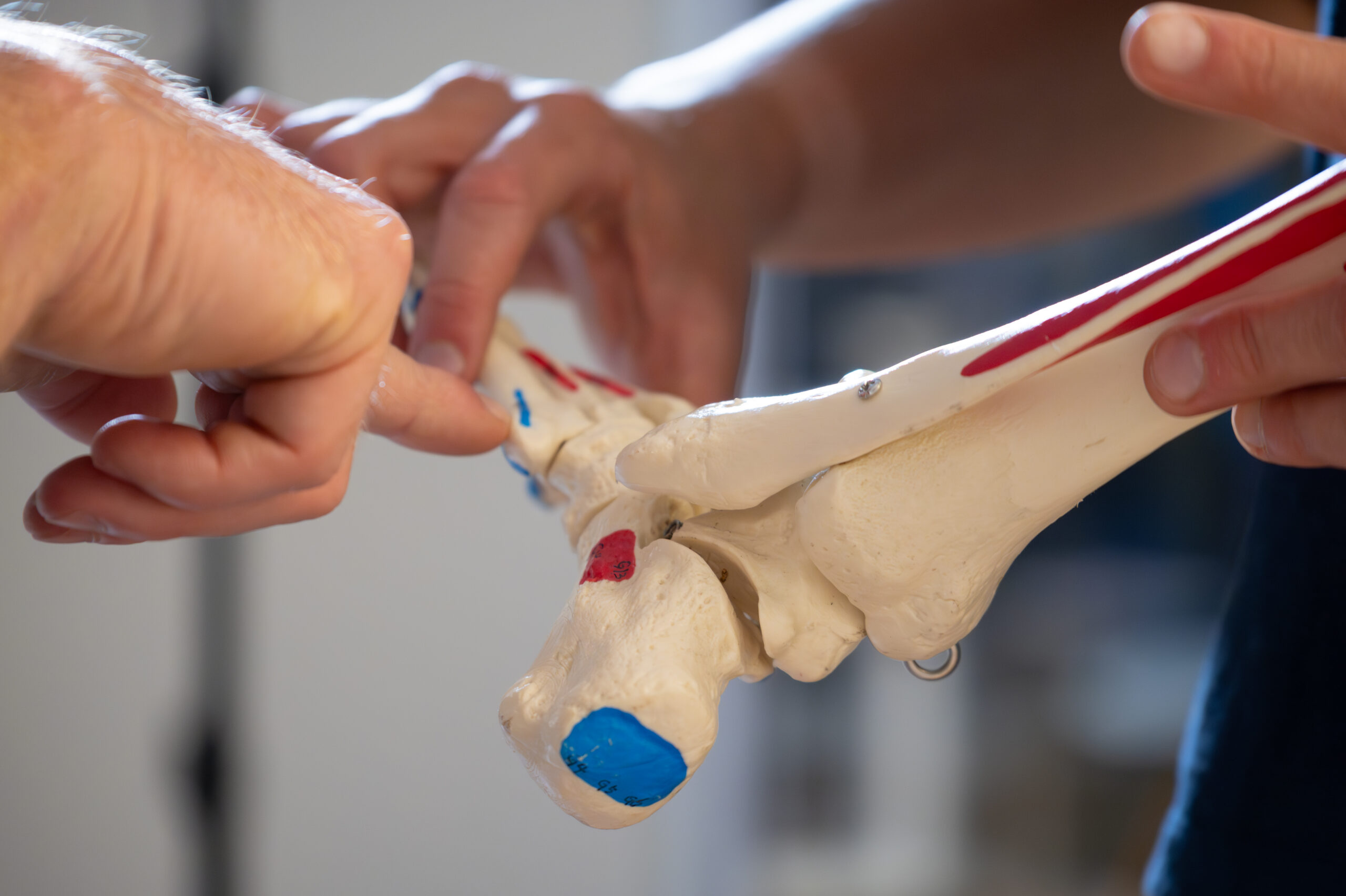
Iliotibial band syndrome usually causes pain on the outside of the knee during running. You may also hear it called “runner’s knee.” Many mechanical explanations sound plausible, but one explanation does not fit every runner.
Is the band simply too tight?
Older accounts focused almost entirely on the band rubbing over bone. Current models are more nuanced: repeated running load, individual movement patterns and the capacity of local tissues interact. Trying only to stretch or “release” the band is therefore unlikely to answer every case.
A clinical assessment should check that the pain pattern fits this condition and look for other sources of lateral knee pain when symptoms are atypical.
Recent training changes matter
Pain may appear after a change in distance, frequency, speed or downhill running. Temporarily reducing the most provocative sessions can let the runner keep some activity. The load relationship is real but not a universal equation: a particular mileage increase does not automatically cause iliotibial band pain.
The running clinic’s practical guidance discusses modifying running stress, while the scientific literature reminds us to assess the whole person rather than impose one fixed running rule. See how to build running volume for a broader training-load plan.
What does treatment research show?
A 2024 systematic review examined conservative treatments in runners. Hip abductor strengthening was common and was associated with improvements in pain and function, but programmes varied widely. The evidence does not establish one superior protocol for everybody. Gait retraining may help selected runners, although stronger trials are needed.
- Identify when pain starts: after a set time, on descents or with fatigue.
- Review all recent training changes, including shoes and terrain.
- Assess leg strength, pelvic control and single-leg tasks.
- Consider gait modifications only when a specific finding and clear goal support them.
Must running stop completely?
Not necessarily. Depending on irritability, a small tolerable amount of running may remain possible if it does not create a lasting flare-up. Rebuild the capacity to handle the terrain and pace that matter to the runner. Endurance physiotherapy in Basel can help plan this progression. Book an assessment.
Frequently asked questions
Is iliotibial band syndrome caused by a short or tight band?
That is an oversimplification. Running load, physical capacity and individual biomechanics can all contribute; stretching the band alone is not a complete treatment.
Can I continue running with iliotibial band syndrome?
Sometimes. It depends on symptom irritability and whether a reduced running dose avoids a lasting increase in pain.
Do I need to change my running form?
Not automatically. A targeted cadence or gait change may help some runners after assessment, but there is no single ideal technique for everyone.
Leave a Reply