
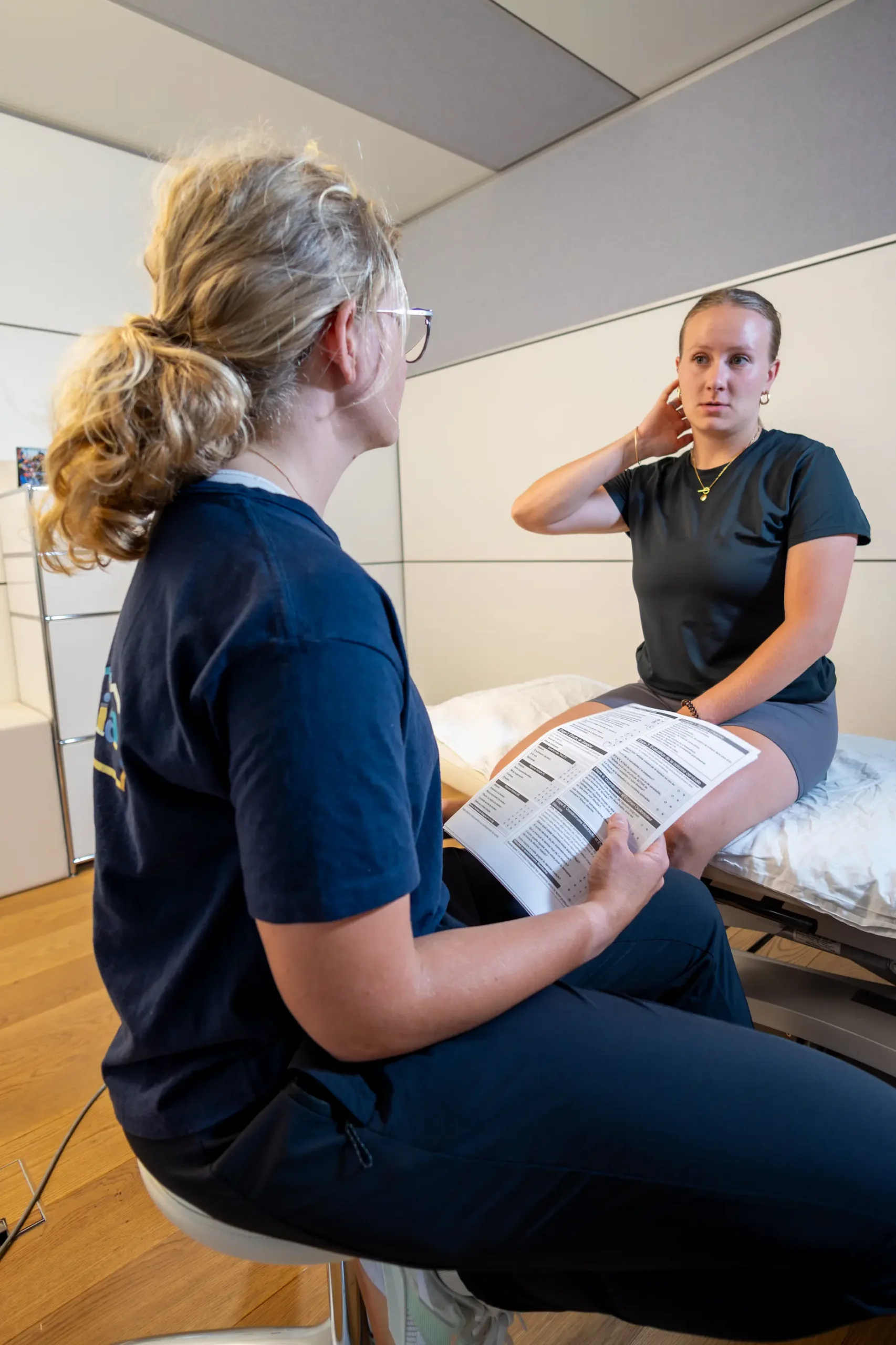
By Millie Brecheisen, sports physiotherapist in Basel.
SCAT6 is a familiar tool in the assessment of sport-related concussion. A poor result alone does not prove the diagnosis, and a good result alone does not clear an athlete to play.
What does SCAT6 assess?
The Sport Concussion Assessment Tool 6 brings together symptoms, orientation, memory, concentration, neurological screening, balance, coordination and an initial neck assessment. It gives a structured view beyond “do you have a headache?”. Diagnosis still depends on the injury mechanism and the whole clinical examination.
Most useful soon after injury
The systematic review underlying SCAT6 found that earlier SCAT versions differentiated concussed and non-concussed athletes best during the first 72 hours. Their discriminatory value then declined over the first week. SCAT6 is primarily an acute assessment tool.
Not a return-to-sport clearance test
Exercise intolerance, vestibular or eye movement symptoms, neck pain and sensitivity to busy visual settings may persist after individual SCAT6 components normalise. SCOAT6 supports a more detailed office assessment after the initial phase. Depending on the patient, VOMS, neck, balance and exertion tests may add information. The Amsterdam consensus sets out a staged, multidomain return to sport.
Read about concussion assessment in Basel. Arrange a consultation.
What happens after SCAT6?
An acute score informs the next clinical decision: observation, further examination and a plan for the following days. SCAT6 does not replace medical assessment when warning signs appear, or follow-up when symptoms change.
- An athlete with a suspected concussion should be removed from play and assessed appropriately.
- Recorded symptoms and their course matter; an early normal value should not obscure later problems.
- Training and competition are reintroduced in stages, taking account of symptoms, function and the demands of the sport.
Frequently asked questions
Can SCAT6 diagnose concussion on its own?
No. It is a standardised assessment aid within the full clinical history and examination.
Can it still be used several weeks later?
Some parts can be informative, but persistent symptoms usually need a broader clinical assessment.
Does a normal SCAT6 mean I can return to sport?
No. Symptoms, exercise tolerance, relevant neurological and vestibular functions and staged progression also matter.
Leave a Reply