
By Millie Brecheisen, sports physiotherapist in Basel.
An impact to the head may also load the cervical spine. The neck belongs in a post-concussion assessment, but the word “instability” needs care.
Neck symptoms do not prove structural instability
Neck pain, headache, stiffness, dizziness or a heavy-head feeling can occur after an impact. A systematic review found cervical symptoms common after concussion, especially with prolonged recovery. Cervical dysfunction may contribute without any structural ligament instability.
Why do symptoms overlap?
The neck supplies position information about the head. Cervical, vestibular and concussion-related symptoms can therefore look similar. A truly unstable bony or ligament injury is a different, potentially serious medical problem. It cannot be diagnosed from a feeling of instability or one painful manual test. Research on upper cervical instability emphasises the complexity of identifying it.
When should medical assessment come first?
Following trauma, severe or worsening neck pain, marked midline tenderness, progressive weakness, significant sensory change, neurological signs or a high-energy mechanism warrant appropriate medical assessment. A suspected serious injury must be investigated before routine rehabilitation.
When serious injury has been excluded
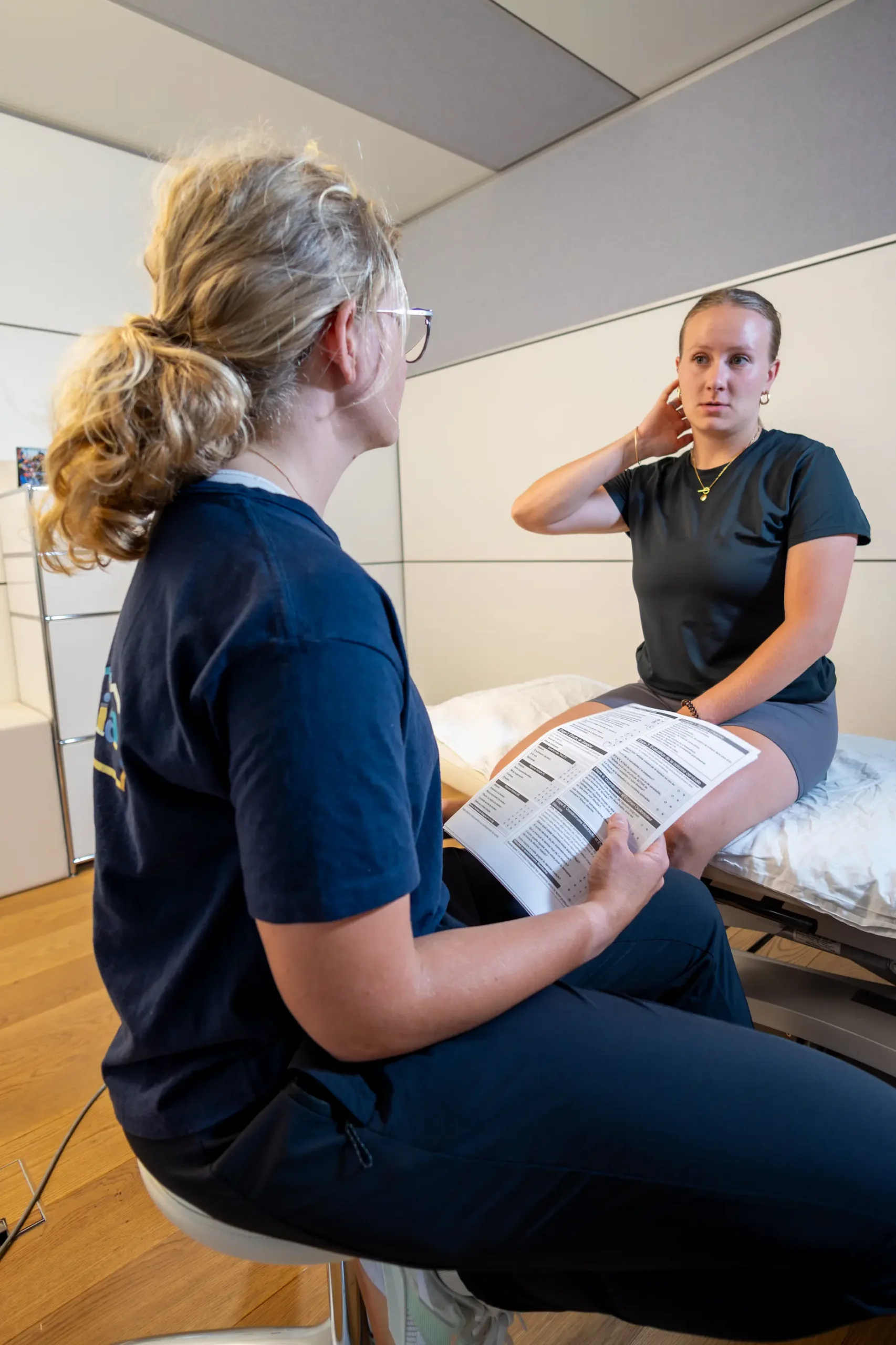
Assessment can explore movement, strength, endurance, head repositioning and how neck movement interacts with gaze and balance. SCOAT6 includes cervical examination. Individualised cervicovestibular rehabilitation may help when the findings support it. In my practice, I avoid applying a frightening structural label without evidence.
Explore concussion care and vestibular assessment. Book a consultation.
Putting neck findings in context
The first step is to understand how the injury occurred and whether there are signs of serious damage. Functional tests and exercise come after that safety check. A vague feeling of “wobbliness” should not automatically be labelled a ligament injury.
- The assessment relates neck movement and strength to gaze, balance and the tasks that provoke symptoms.
- Warning signs or an injury mechanism suggesting significant damage call for medical evaluation first.
- Once serious injury is excluded, movement and load can be rebuilt gradually, with clear goals for everyday life and sport.
Frequently asked questions
Does a heavy-head feeling mean my neck is unstable?
No. It can occur with a range of cervical problems without structural ligament instability.
Can a manual test alone diagnose instability?
No. Serious injury is assessed from the mechanism, clinical and neurological signs and, when indicated, imaging.
Can the neck be treated after concussion?
Yes, when serious injury has been excluded and examination shows a relevant cervical contribution.
Leave a Reply