
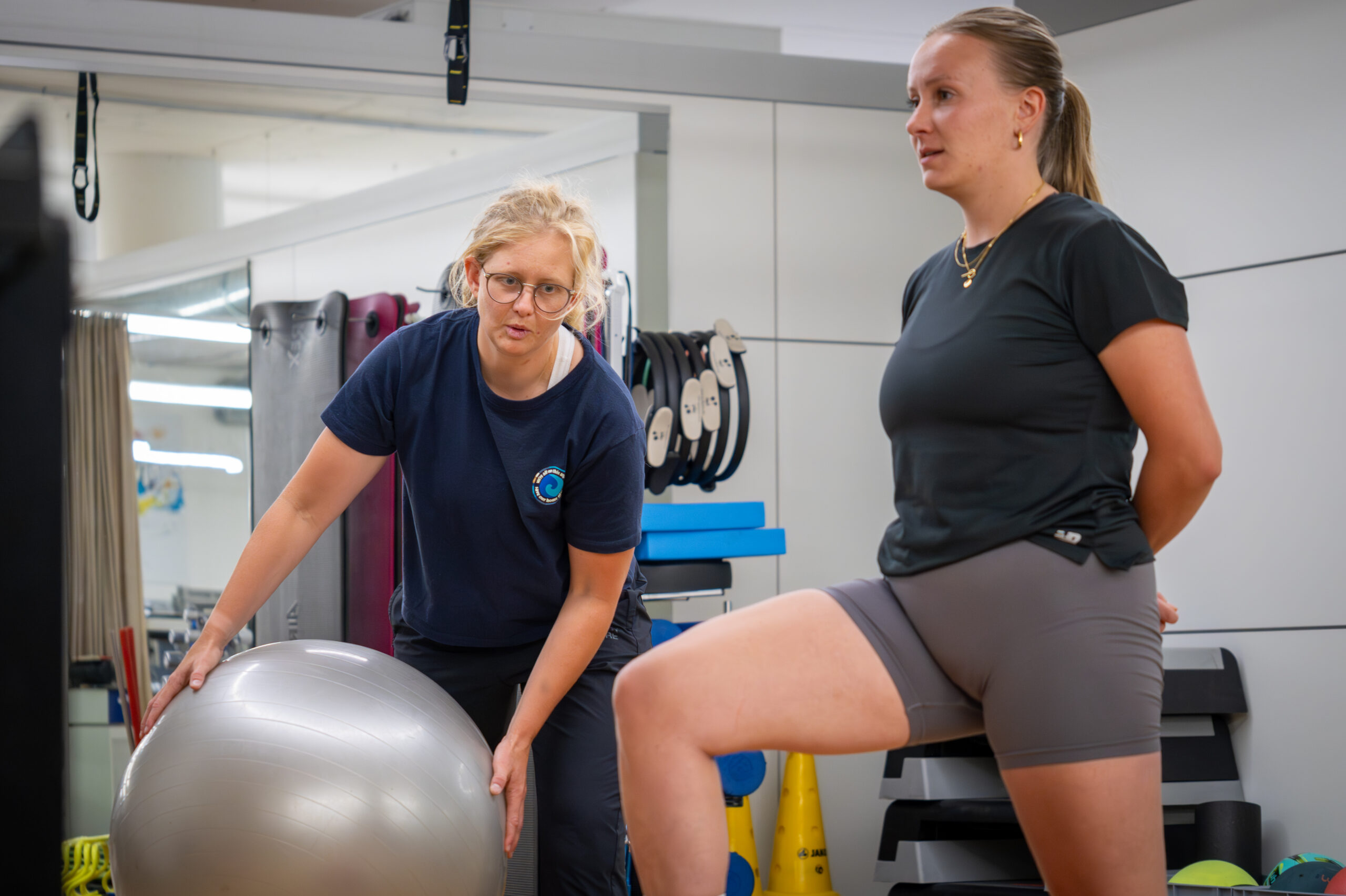
By Millie Brecheisen, sports physiotherapist in Basel.
Sports physiotherapy is not a separate healthcare profession. A sports physiotherapist is a physiotherapist whose work is particularly focused on training demands and the route from injury back to sport.
Everyday recovery is not always sports readiness
Walking and climbing stairs without knee pain may be an important milestone. A footballer, trail runner or mountain biker may then need to tolerate heavy strength work, jumping, braking and repeated efforts under fatigue. Rehabilitation has to rebuild those capacities progressively.
Specific skills and load planning
The updated international SportsComp standards describe assessment, rehabilitation, prevention, health promotion and understanding the sport and performance setting. This does not mean a general physiotherapist cannot treat an athlete; specialisation adds tools for specific demands.
Plans consider training load, recovery, competition schedules and return-to-sport criteria. Treatment need not stop the day pain resolves. An international prevention consensus also emphasises injury history, competitive level and sport-specific needs.
Connecting healthcare with performance
The physiotherapist may collaborate with a doctor, surgeon, coach or strength specialist. In my practice, the priority is to bridge the gap between treating the injury and rebuilding what the athlete actually needs. These principles apply to recreational athletes as well as professionals.
Explore sports physiotherapy in Basel and endurance sport support. Book an appointment.
When can a sport-specific approach help?
The key question is not just how you move in the clinic, but what your sport demands outside it. Bring an outline of a typical training week and tell the clinician what you want to return to.
- A runner may need a progression from walking to repeated running, then hills or speed when appropriate.
- A field-sport athlete may need braking, reactive movement and changes of direction in addition to strength.
- After surgery, tissue healing and medical instructions must shape load progression. Where useful, the plan is shared with the coach or treating doctor.
Frequently asked questions
Is a sports physiotherapist a different profession?
No. It is physiotherapy with sport-specific knowledge and skills.
Do I need to be a professional athlete?
No. The same principles can help anyone aiming to run, cycle, ski or train after an injury.
Why continue rehabilitation after the pain is gone?
Sport can demand much more strength, speed and control than daily life. Pain relief alone does not show these capacities have returned.
Leave a Reply