
By Millie Brecheisen, sports physiotherapist in Basel.
Some people recover quickly from a concussion. Others still have headache, dizziness or concentration problems weeks later. Waiting in complete rest does not explain what keeps the symptoms going.
Similar symptoms can have different drivers
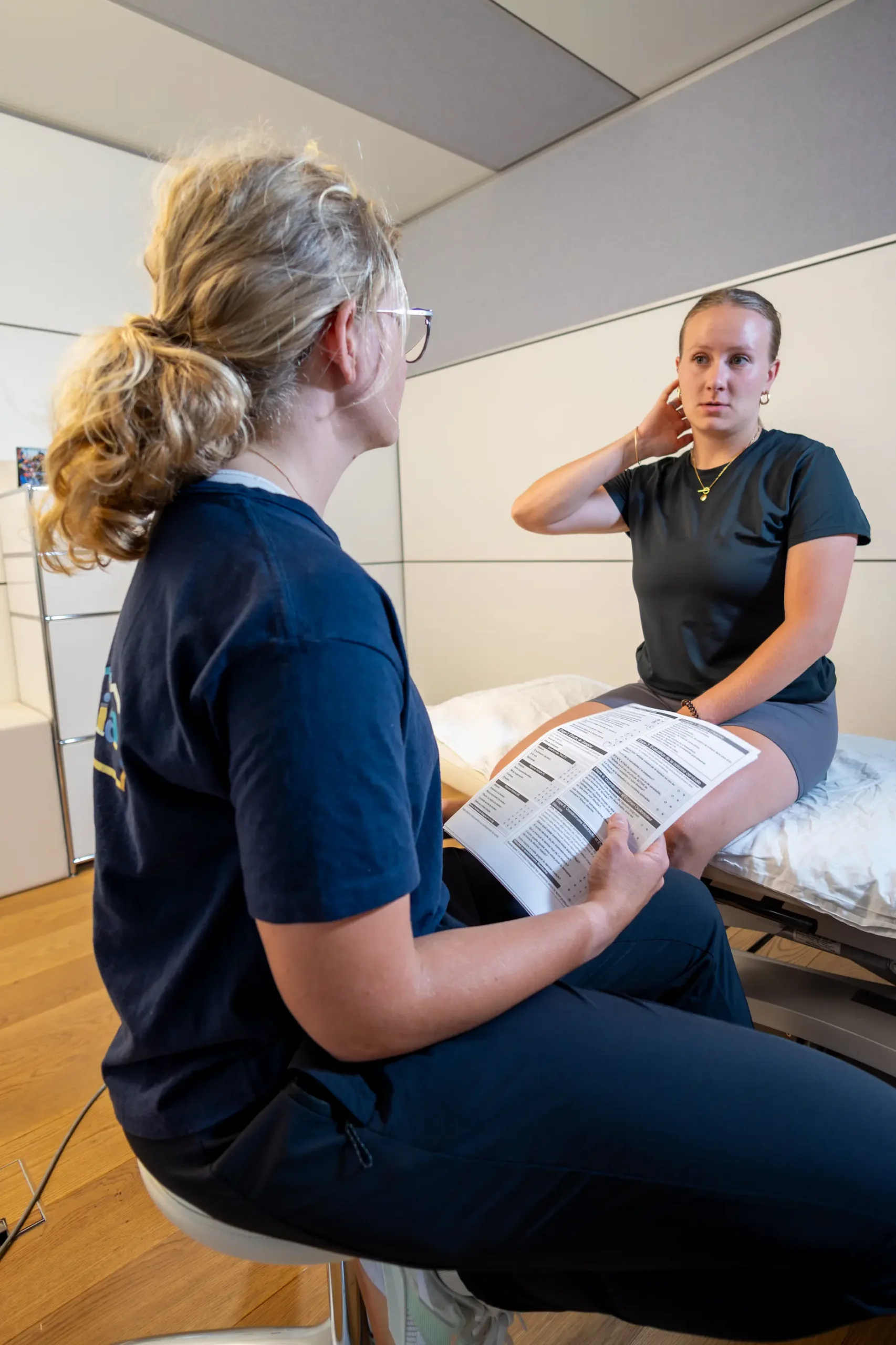
Headache, fatigue, nausea and visual sensitivity may involve exercise intolerance, vestibular and eye movement problems, the neck, sleep, migraine or psychological factors. The Amsterdam consensus therefore recommends an individual clinical assessment rather than one programme for everybody.
Gradual activity and targeted rehabilitation
After a brief period of relative rest, a gradual return to everyday activity and exercise is generally encouraged. Subsymptom aerobic exercise can be useful when appropriately assessed and dosed. For dizziness, neck pain or headache lasting more than ten days, the consensus advises considering cervicovestibular rehabilitation. That is a clinical decision based on observed impairments, not an identical exercise sheet for every person.
When several domains contribute
A systematic review of non-drug treatments found promising options but considerable variation in studies and quality of evidence. Multidisciplinary care may be useful when more than one system is involved. The aim of assessment is to identify the modifiable limitations, agree on realistic goals and check the response over time.
Explore concussion assessment and vestibular physiotherapy. Book an appointment in Basel.
What to bring to a follow-up assessment
For a few days, note which activities bring on symptoms, how long recovery takes and what you can still do comfortably. This pattern is often more useful than a single symptom score.
- If symptoms mainly appear during aerobic exertion, a graded exercise assessment can help set a tolerable training level.
- If head turns or visually busy places are difficult, vestibular and eye movement tasks become more relevant.
- With neck pain or headache, the cervical spine should be considered. Sleep, school or work demands and daily load also belong in the discussion.
Frequently asked questions
When are post-concussion symptoms considered persistent?
Definitions differ. A course that is not improving as expected deserves reassessment rather than indefinite waiting.
Must I avoid sport until every symptom disappears?
Prolonged strict rest is generally discouraged. Carefully adapted physical activity can be part of care, depending on the clinical assessment.
Why do my symptoms vary across activities?
Screens, running and head movements place different demands on different systems. Their pattern can guide the assessment.
Leave a Reply